IF you gave David Warner my Kashmir Slazenger…
THEN he’d struggle to hit a six.
That wouldn’t change his hand-eye coordination, his strength, or his timing. But it would impact his power, and therefore make him a worse player.
So why are considering denying distance athletes the best opportunity for success?
The Vaporfly invasion has been nothing short of incredible – take a look at this video from the USA.
The foundation of running is to see how fast someone can get from Point A to Point B. Whether it be 100m or a marathon, that’s what athletes and fans alike are obsessed with.
The faster the better, until now.
Whilst doping has tainted the integrity of the sport in recent times, comparisons between the dark art and a pair of running shoes are absurd.
A very small percentage of runners have been caught doping, but all runners wear shoes (unless you’re Abebe Bekele).
My opinion is simple:
More efficient shoes will assist an athlete to reach their potential, whereas performance enhancing drugs will increase their potential.
Prior to the mid 1960’s athletics tracks were made of cinders which were said to be roughly 1.5% slower than the modern day all-weather athletics track. This would change the conversion mark for the elusive 4-minute mile to 3:56.23, which is a completely different ball game.
The bottom line is that technology has propelled the sport of distance running through both science in the form of understanding the human body, and so too the advancement of resources.
Looking for ways to run faster is not new.
Here’s Craig Mottram and his team in a short documentary entitled ‘The Big Mazungu’ talking about custom spikes (skip to 11:50).
Furthermore, if you take a look back to 1971, Bill Bowerman (who would go on to co-found Nike) used his waffle making machine to form an innovative shoe sole that would allow runners to perform to the best of their ability.
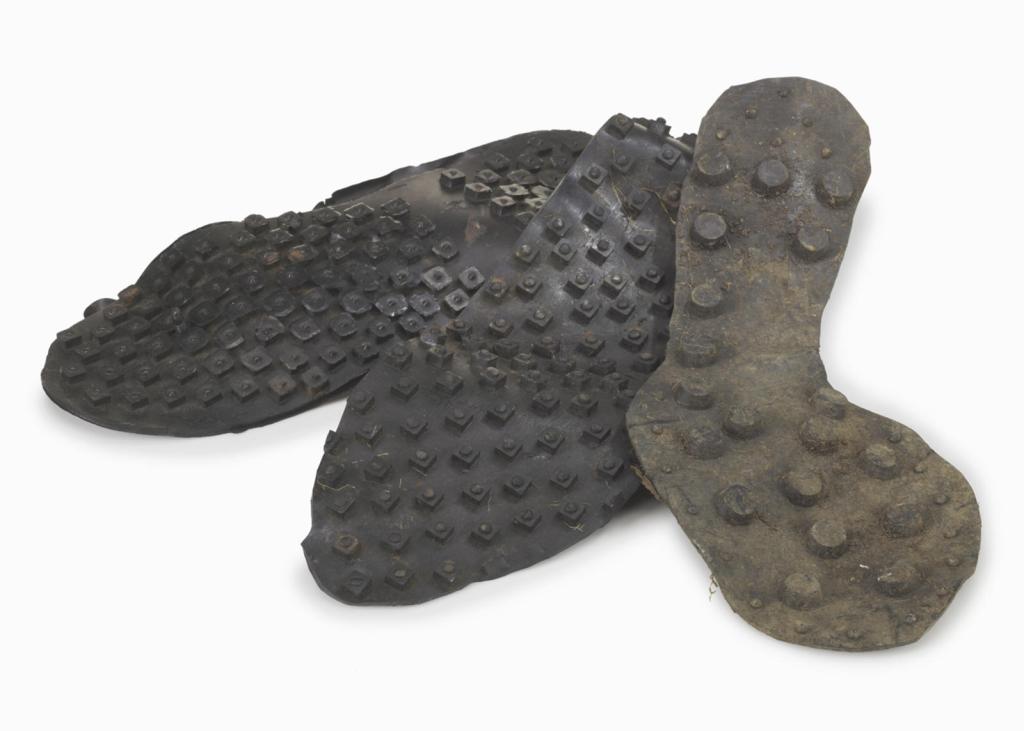
So why in 2020 are we up in arms when Nike have made the next big technological breakthrough?
I don’t think Bowerman was flogging his waffle shoes to the masses on eBay, so the take that they provide an unfair advantage and aren’t available to everyone doesn’t sit well with me.
Both the 4% and Next% models in question are available on Nike’s website to anyone in the world with $320 to their name. How is that unfair?
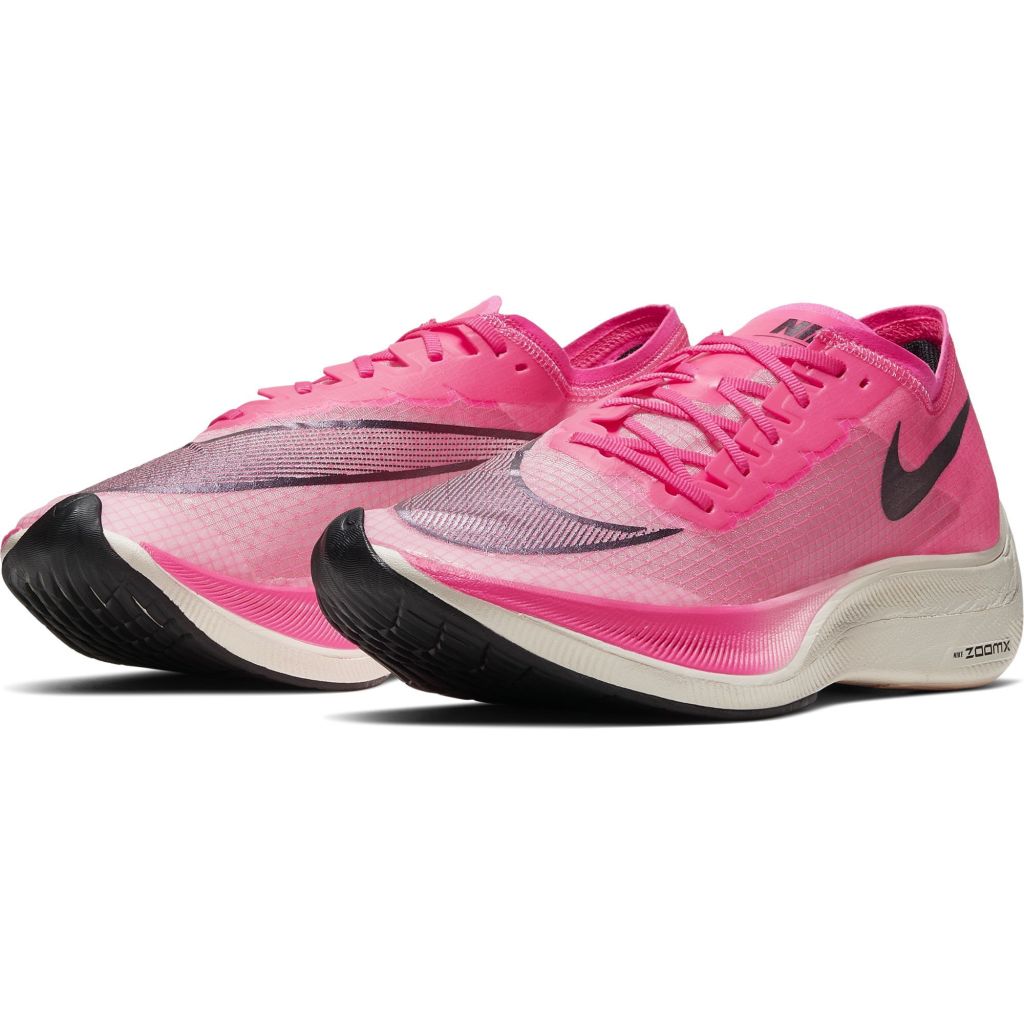
No shoe on the market generates more energy than the runner puts into it.
In an athletics race when someone is winning you don’t ask them to slow down, you speed up.
Nike is currently like the man-child in the U14’s, and instead of appreciating how good they are, we are whinging like the parents from the opposition.
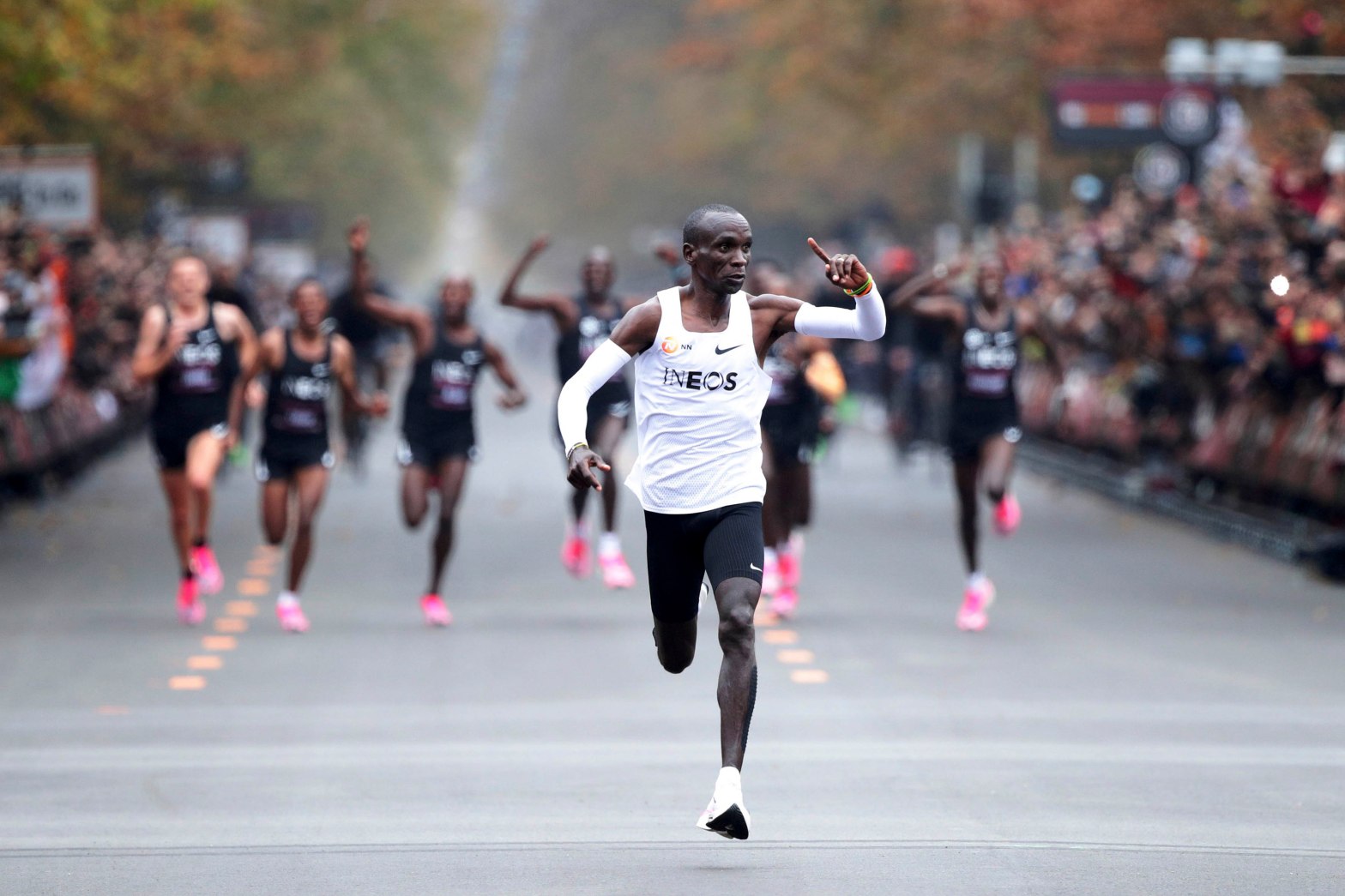
Just a few days ago Rhenox Kipruto demolished the 10km(road) World Record in a time of 26:24. The 20-year-old Kenyan was wearing Adidas shoes.
If you aren’t on the Nike train, be like Rhenox. Use another shoe and get on with it.
The talk of Nike’s developments has taken away from the quality of the athletes.
Kipchoge ran in custom shoes, but professional athletes in most sports have custom equipment to suit their personal needs. Running should be no different.
Kipchoge had the following to say on the controversial topic.
“It’s the person who is running, and not the shoes,” Kipchoge said.
“It is (Lewis) Hamilton who does the driving and not the Pirelli tyres.
“Controls have to be there because fairness is good.
“But technology is growing and you can’t deny that.”
It would appear Nike is already on to their next project anyway.
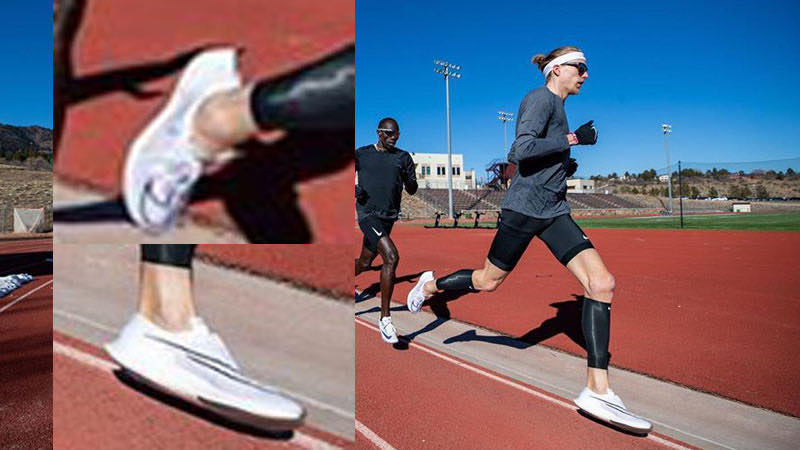
When it comes to running shoes this is not a new thing. Athletes constantly jump on the best possible shoe and then wait for the next one. And why wouldn’t they?
Nike are well ahead of the game. If we try to restrict resources to preserve previous performances, the potential of future performances will be limited.
For many years shoe companies have been trying to find the edge. So now that Nike have succeeded, why are we upset?
To finish on a personal note,
I recently finished 10th in a race at the Victorian Milers Club. Should I ask for this to be corrected to 9th as the winner, Will Garbelotto, was wearing Nike’s Next% shoes? Or should I swallow my pride and understand that this is quite possibly the most irrelevant result ever?
I’ll go with the latter.
By the way, I’ve never run a step in the 4% or Next% shoes. Pegs 36’ers for me.
Lachie Moorhouse
 Words by House