Unseen hours of the night, Google Translate and dodgy websites that reside in the depths of the internet are all solid indicators that the European athletics season is well and truly back. And if Monaco is anything to go by, we’re in for a lengthy treat.
One would be forgiven for only following the Diamond League circuit in search of their favourite Aussie athletes, but one would also be susceptible to waking up to results from a midweek meet they didn’t even know existed. That’s why trivia answers like “The Irena Szewinska Memorial” to the question “Where did Matt Ramsden run 4:55.44 to win a 2000m race?” are saved for the Sean Whipp’s of the world.
The good news is that not much digging is required to find out about the Stockholm Diamond League on the 23rd of August. The better news is that it is right here for you.
Stockholm will see five Australians compete, with Nicola McDermott (High Jump), Jessica Hull (1500m), Peter Bol (800m), Matthew Ramsden and Stewart McSweyn (1500m) all set to take part in what is set to be a quality meet.
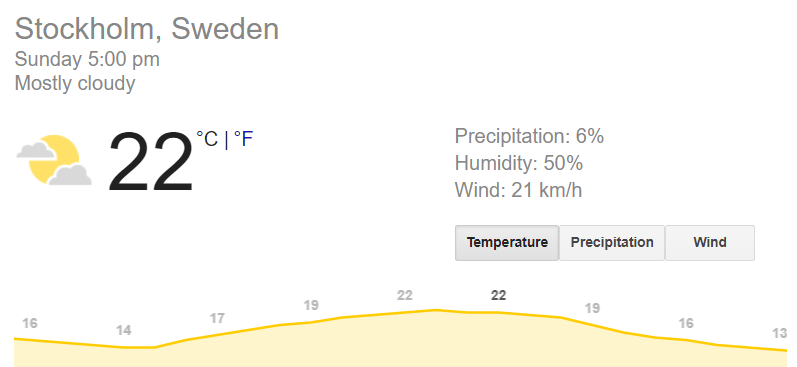
We all know that perfect conditions for athletics are a rarity, but it could be worse than this.
Men’s 800m (12:27am Monday AEST)
Peter Bol arrived in Monaco with one sub 1:45 800m result to his name in his career, and he left with two. It was no secret that Coach Justin Rinaldi had kept his leading duo in sharp form back in Australia with a few impressive time trials, but rolling off the plane and casually dropping a 1:44.96 is a completely different beast. Perhaps the most promising sign for Bol was running that time whilst leaving significant room for improvement. The 26-year-old raced aggressively and weakened in the home stretch, and with some racing under his belt looms as a force to be reckoned with. Bol had a midweek hit-out in Poland where he finished 4th behind Jospeh Deng in 1:45.92, where the pair focussed on their racing rather than the clock in a very messy field. Bol’s 2nd career best run grants him another opportunity here in Stockholm and with the likes of Brazier, Vazquez and Kramer ensuring a hot pace, he will be looking to close in on his PB he set at this same venue in 2018.
Leading into Monaco, Jess Hull had the weight of expectation on her shoulders after some promising results in Australia. Not only did she meet them, she surpassed them. Easily. It’s hard to fault her run where she obliterated her PB and clinched Benita Willis’ National Record in a time of 14:43.80. Whilst it’s a tough ask dropping straight into a 1500m of this quality, there is no doubting the shape she is in or the fact that she belongs on the world stage. In September of 2019, Hull ran a 15:00.32 5000m PB in Germany followed by a 4:01.80 1500m PB one month later in Doha. Though tough to draw correlations due to training phases and the like, it’s fair to assume Linden Hall’s National Record of 4:00.86 may come under fire. The race in Stockholm could sit perfectly for Hull, with any field deprived of Sifan Hassan being one that is likely to be paced a bit less ambitiously. The Pete Julian product will be looking to work with teammate Shannon Rowbury much like she did in Monaco, as she looks to give this race a real good shake with form runners Laura Muir and Ciara Mageenan.
If it’s 1:30am and the voice in your head is telling you to throw in the towel because you have work tomorrow – don’t. This one is well worth the wait. Stewart McSweyn and Matthew Ramsden will be toeing the line in a classy 1500m that features Timothy Cheruiyot along with Jakob and Filip Ingebrigtsen.
McSweyn flew under the radar in Monaco and is probably a victim of his own success. His rise has been so rampant that even a 13:13.22 for 5000m off no racing apparently isn’t a talking point anymore. Back down in distance to the 1500m where he boasts a PB of 3:31.81 (twice), the King Island product will be looking to showcase his range and sharpen up over the shorter trip. McSweyn’s performances might have plateaued for now, but the upper echelon of distance running isn’t a bad spot to do so as he works towards his next breakthrough. If a consistent performer at the top level isn’t exciting then you’re doing athletics wrong!
Matthew Ramsden is forging a much similar career path to that of McSweyn, yet will no doubt be looking to be the first Matt Ramsden rather than the next Stewy McSweyn. Ramsden was forced to eat his vegetables by pacing in Monaco (a WR mind you) before indulging in dessert in Poland with a blistering win, or ‘fat dub’, over 2000m. The 23-year-old (who hasn’t updated his Twitter bio) stormed home in a 53-second last lap to put Marcin Lewandowski and the field to bed in a time of 4:55.44, good enough for 2nd on the Australian all-time list behind Craig Mottram (4:50.76). Ramsden has gone from strength to strength in 2020 and with a few efforts under his belt looks ready to give this his best.
The twin towers also have Yomif Kejelcha covered for height, which is pretty alpha. Hold off on the calls about Ryan Gregson’s 3:31.06 National Record falling – it has survived a decade for a reason.
Nicola McDermott will be the first Aussie in action on Sunday night when she takes on the might of Europe in the High Jump. In the brief stint of athletics we saw in early 2020 in Australia, McDermott was jumping superbly along with Eleanor Patterson who set a new National Record (1.99m), with the pair raising the bar of Australian High Jump both figuratively and literally. McDermott cleared a PB of 1.96m in Canberra, before cementing her form with a repeat performance in Wellington. The 2018 Commonwealth Games bronze medallist recently jumped 1.90m in Sweden to kick off her overseas proceedings and will be looking to build on that performance. McDermott’s main rivals come in the form of Ukrainian duo Yuliya Levchenko and Yaroslava Mahuchikh, who have cleared 2.00m and 1.98m respectively this year.
According to the script, the Tokyo Olympics have just concluded. The athletes are licking their wounds post celebrations and the track and field world is relishing some rare airtime in the Australian media. Chris, 42, is parked on his couch with a stubby, declaring that 13-minutes for a 5000m “isn’t that fast,” and that he probably could have done that in his day. After a few replays of the 4x100m final, athletics is put on the back-burner for another few years.
But we all know that the script was torn up a long time ago, and Stewart McSweyn will have to wait another year for Chris’ expert feedback via Twitter on how to handle pressure (Chris drives a forklift, he would know).
The good news for us running nerds is that athletics goes on, and the Diamond League swings into action on August 14th in Monaco. Seven Australians have made the start line with Joseph Deng, Peter Bol, Ryan Gregson, Stewart McSweyn, Matthew Ramsden, Genevieve Gregson and Jessica Hull all set to take part.
For us Melbourne locals, Monaco is fast like Lakeside is windy. At most meets you would ask IF it will be windy, but at Lakeside you ask HOW windy. Same goes for Monaco, it’s just a matter of how fast.
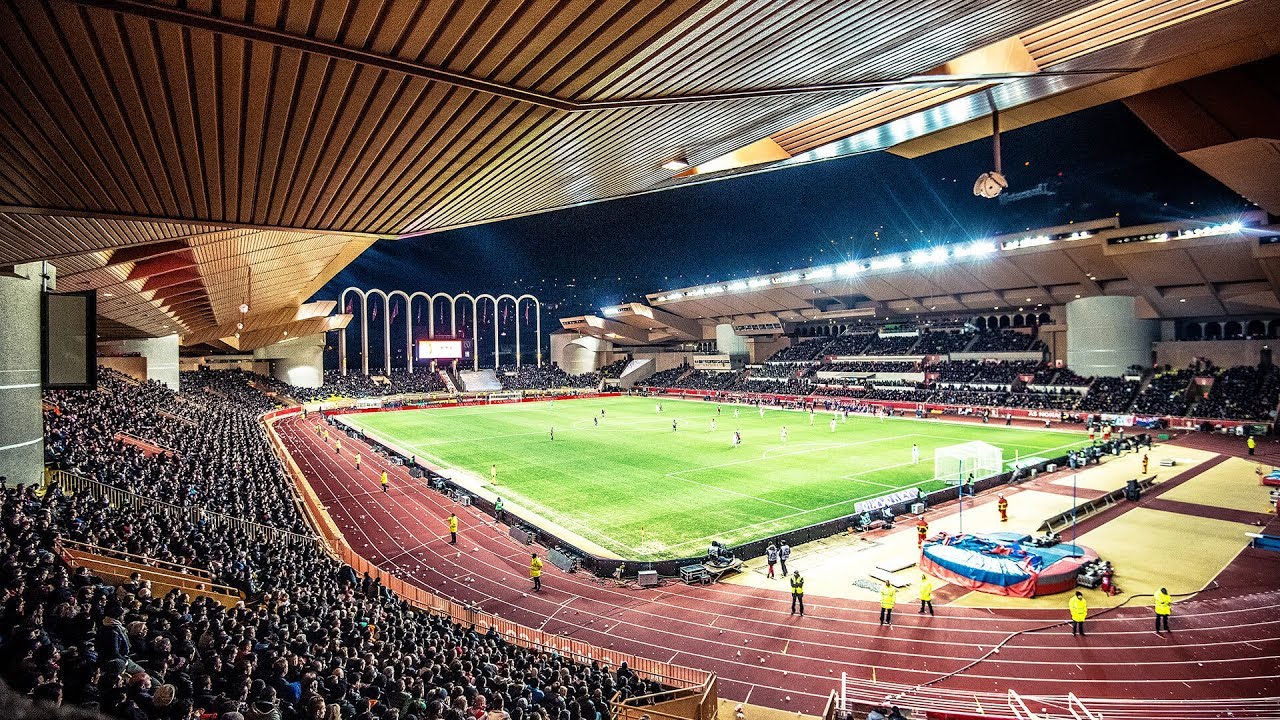
If you play FIFA you might’ve come across the stadium Stade Louis II and questioned why it has an athletics track around the soccer pitch. Well, believe it or not, people run around it. If you’re unfamiliar with FIFA you can check out the video below, which shows you everything you need to know except for the rumours that it might just be 397m.
Stacked fields in Monaco should be conducive to fast times.
Men’s 800m (4:12am AEST, Saturday 15th August):
Here we have The Fast8TrackClub duo of Joseph Deng and Peter Bol, complimented by a very classy field. The pair fall under the tutelage of Justin Rinaldi and have clocked some relatively outrageous time trials in the past few weeks. First, a 2:17.62 1000m time trial where they went stride for stride over the journey in their trademark casual style, going through the 800m mark in 1:48.90. Next was a 700m hit-out, where Deng ran aggressively out in front and Bol was conservative before closing quickly. A time of 1:30.70 was enough to suggest that these boys are more than ready, and will be competitive in Monaco. Monaco is a happy hunting ground for Deng in particular, the same venue in which he broke the Australian 800m record in 2018 with a 1:44.21. They find themselves in a slick field featuring the reigning World Champion Donavan Brazier (1:42.34 PB), along with Amel Tuka (1:42.51) and Ferguson Cheruiyot Rotich (1:42.54).
What an opportunity for our Aussie women. Genevieve Gregson and Jessica Hull will be toeing the line to kick-start their campaigns amidst the world’s best. Hull has continued her rampaging NCAA form since turning professional, and whilst based in the US under Pete Julian, she returned home in the Australian summer. In this time she took out the Australian 5000m national title in February in a time of 15:06.12, and ran an incredible 8:41.80 over 3000m in unfavourable conditions, taking home $2,000USD as part of Steigen’s virtual race initiative. She boasts a PB of 15:00.32, one that won’t last much longer. Gregson has also staked her claim over the 5000m, notably an Olympic finalist over the distance in 2016. Gregson has been staying busy in Australia, taking out the coveted national 10,000m title in a time of 32:47.83 at Zatopek in December of 2019, meaning it was no surprise that she also took out the Queensland state title this August. Gregson raced over 5,000m in an early season tester in February, clocking 15:20.60 to take out 2nd place behind Hull. A sneaky record around The Tan in Melbourne was also indicative of sublime form, along with an 8:56 rust-buster over 3000m recently. The girls find themselves in a stacked field featuring Sifan Hassan (14:22.12) and Hellen Obiri (14:18.37), but the strong contingent of runners with PB’s in the high 14-minute range will be particularly appealing to Hull.
Assuming Genevieve Gregson runs in the low 15-minute range, we will only have to wait a further 23-minutes to see her husband, Ryan Gregson, apply his craft in the Men’s 1500m which is usually the fastest on the calendar. Gregson is a veteran on the circuit, highlighted by his Australian 1500m record of 3:31.06 being set in Monaco in 2010 (3,676 days prior to this race). This speed merchant’s form over the shorter distance is relatively unknown, with a 3000m time trial of 7:46.73 described by himself as “nothing flash but a solid platform.” Something a bit more flash was his last lap at the Queensland 10,000m championships just over one week ago, which looked like an unofficial 400m world record on Instagram. Gregson has proven to be a model of consistency over the last decade, in 2016 becoming the first Australian man to make an Olympic 1500m final in 40-years. He is showing no signs of slowing down and his experience should serve him well as he kicks off his season. When the pressure is poured on he shouldn’t be far away. The field consists of Timothy Cheruiyot (3:28.41) who wins just about everything, along with two-thirds of the Norwegian sensation that is the Ingebrigtsen’s, in the form of Jakob and Filip (3:30.16/30:30.01). Also in the field is Craig Engles, who falls down the list of PB’s (3:34.04) but is a cool guy.
About 15-minutes of genuine excitement to see Matt Ramsden give the 5000m a real nudge along with Stewart McSweyn was brought to a close by Luke Mathews telling me he is only the pacemaker! So expect a cameo from the West Australian out in front, likely followed by one from Joshua Cheptegei as he attempts to break a 16-year old world record (12:37.35). McSweyn recently got the better of Ramsden in the Steigen 3000m virtual race, running 7:39.18 to secure the $2,000USD prize. Shouting Ramsden a beer for his duties here shouldn’t be a worry. McSweyn holds the fourth-fastest PB in the field with 13:05.23, along with being a major finalist in the event. He is no stranger to Monaco, where he set his 1500m PB of 3:31.81 in 2019. In December of 2019 he broke the Australian 10,000m record with a time of 27:23.80 good enough to claim the national title, and you have to fear for the longevity of both the 1500m and 5000m records. Apart from Cheptegei, the Kenyan duo of Nicholas Kipkorir Kimeli (12:57.90) and Jacob Krop (13:03.08) may also wreak some havoc but McSweyn will be right among the action. If you liked Mottram because he matched it with the Africans, then McSweyn is your new man.
It’s been a funny old year but our Australian athletes making the start line on the international circuit is something to cheer about. Get around them!
Silence followed by the crack of a gunshot. One shot means go. Two shots means false start. Endless shots means you are embroiled in a situation far more serious than any athletics race. The pressure of a shot that starts a stopwatch pales into insignificance when compared to those that force you to start a new life.
This is the case for Kang Nyoak, who at the age of eight fled war-torn East-Africa with his mum to seek refuge in Australia. Some would consider the subsequent journey to Australia’s wealthiest school and the fringe of elite athletics a fortunate tale; however Nyoak’s emergence is no accident. Instead it is a product of his sheer determination and an obsession with self-improvement.
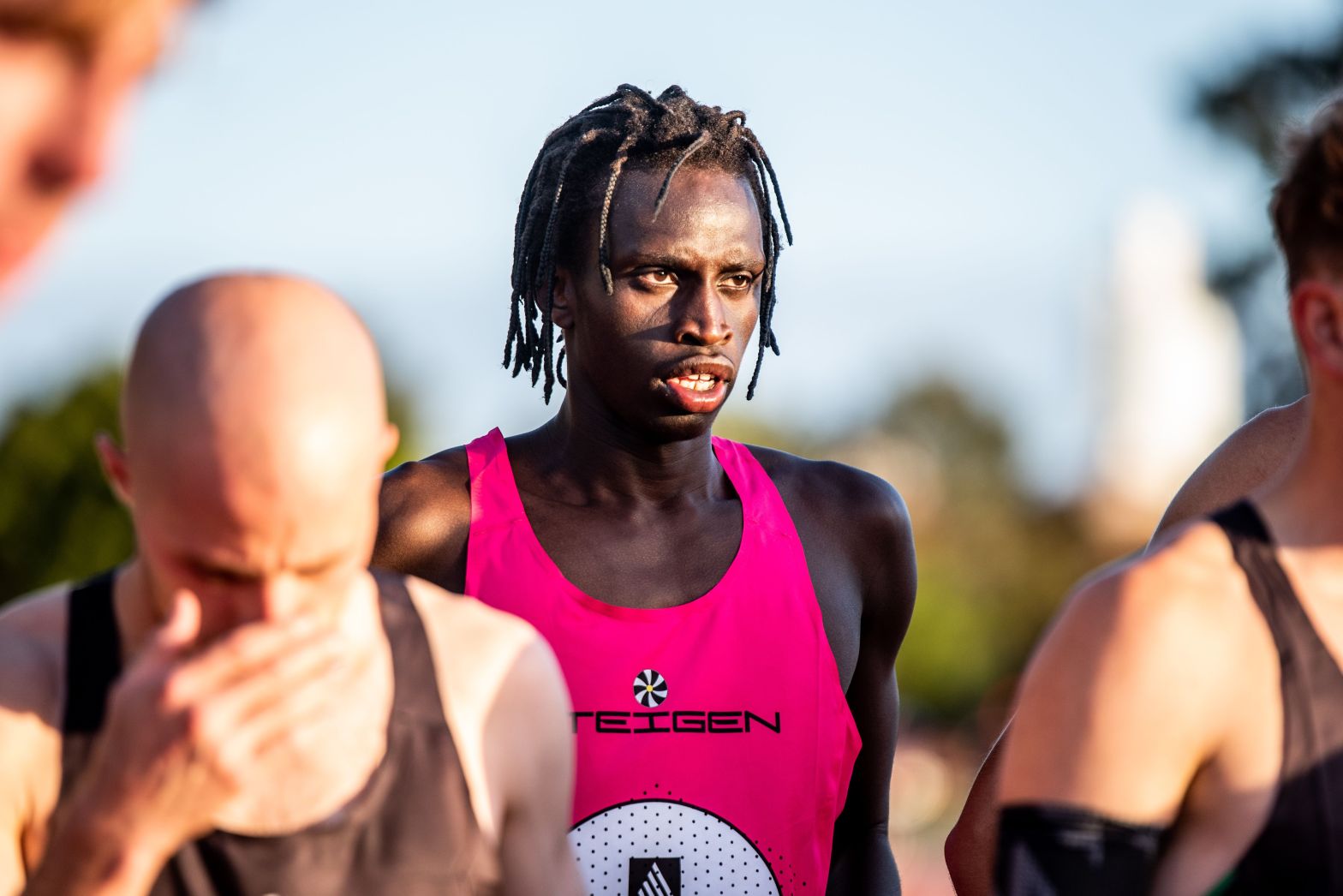
Now 20, Nyoak is cementing himself as a household name on the Australian athletics scene. Whether it’s the cornrows twisted by his auntie, his effortless stride or the trademark bling in his ear – the man is nothing short of an icon.
But scratch a beneath the surface of his athletic prowess and you will find a humble man with an unlikely story, complimented by a dose of perspective. And contrary to his running style, it hasn’t all been smooth sailing.
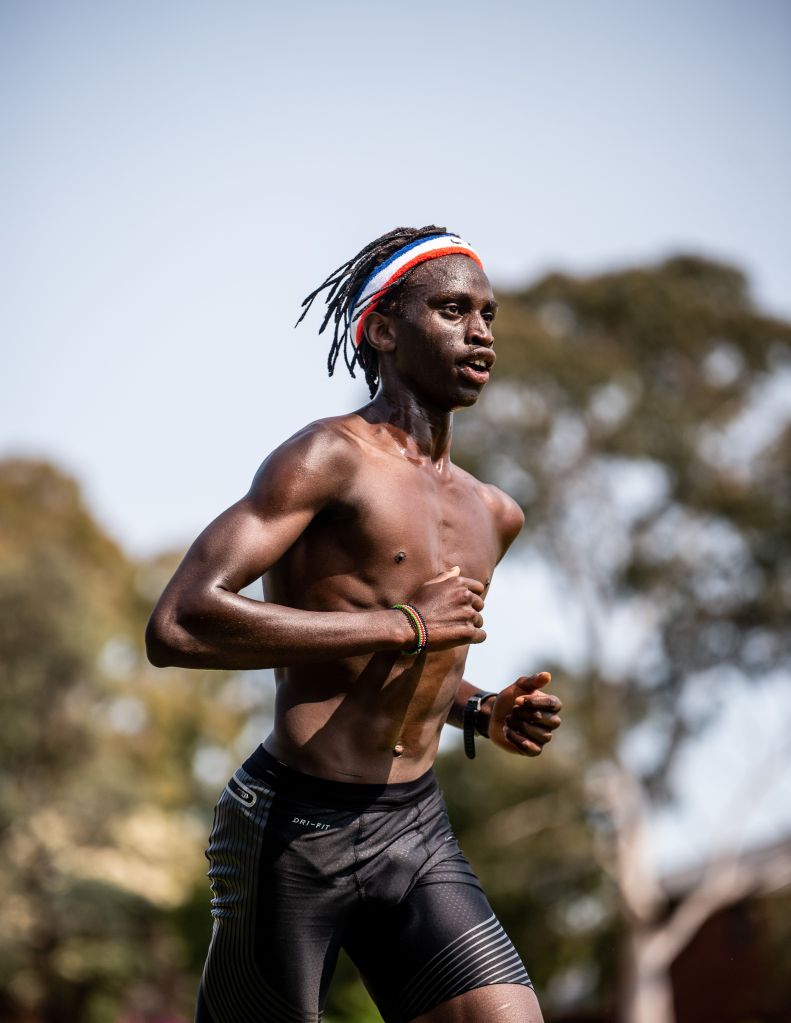
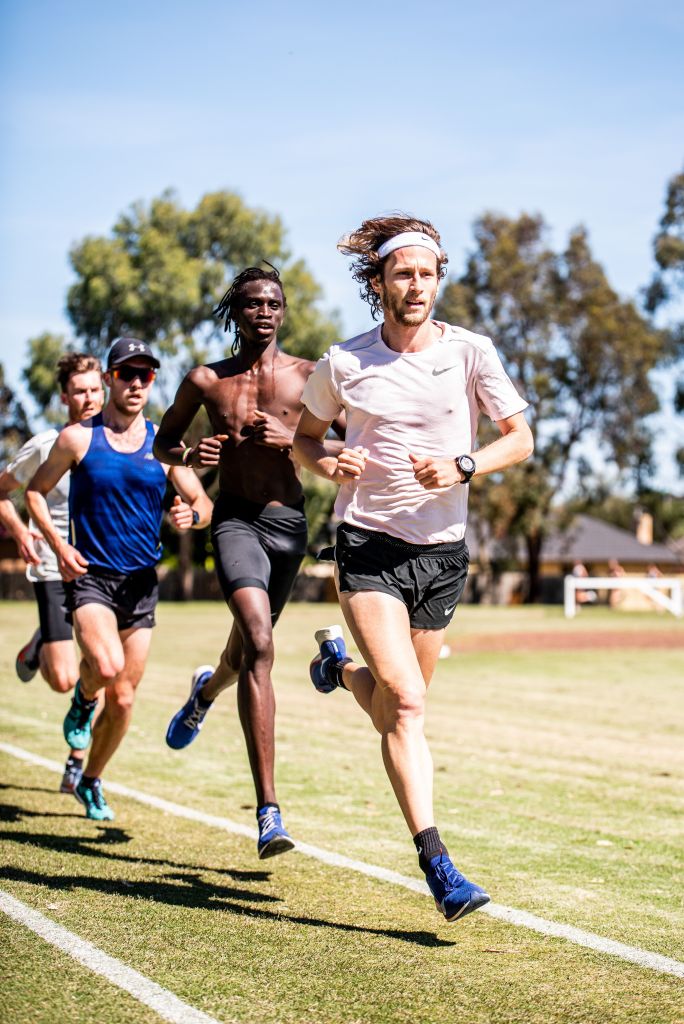
Kang Nyoak mid-rep at a track session. Photo: Riley Wolff.
Born in Ethiopia in the year 2000, Nyoak spent his early years unsettled, bouncing between his hometown and Sudan. With wars between countries and tribes looming nearby, he had no choice but to mature rapidly and become accustomed to life’s challenges from a young age.
“I was fortunate enough to spend most of my time in Ethiopia, but I can’t say the same for my parents who grew up in Sudan,” he says.
“It’s unpredictable what can happen, we would get news that the war is coming our way and we would have to leave straight away.”
He would spend his childhood free from technology, recalling a simpler time in which he would play soccer with his friends in the red dust and the moon would signal their return home.
Nyoak’s brother, Emmanuel, had already gained refugee status in Australia along with their sister Nyamouon, and was the catalyst for the eventual arrival of his mum and brother. But Nyoak recalls the process as difficult, taking over 18 months and putting his mum in significant danger.
“Mum would travel back and forth between Ethiopia and Sudan for interviews and applications, and it was a dangerous route because you could get stopped by the military,” he explains.
So whilst Nyoak attended an Ethiopian private school, his mum, Nyahok, risked her life in search of a better one. And on the 30th of July in 2008, the duo would touch down alongside their cousins in Melbourne, Australia. They arrived with their lives packed into their suitcases and the uncertainty of ever returning home.
“It was weird seeing so many Caucasian people at the airport,” Nyoak reflects with a smile.
“The environment was so clean, everything was so nice.”
Nyoak had escaped the immediate danger of East-Africa, yet his problems were only just beginning. Whilst fluent in Amharic, Neur and Arabic, they would not serve him much use in Melbourne. Living with only his mum and cousins who also did not speak English, Nyoak was forced to find a way to get by in this intimidating new world.
Kang Nyoak graduates kindergarten.
After one year attending English Language School crafting an understanding of the fundamentals, the new-found Australian commenced primary school in Year 4 at Albany Rise, an experience he describes as “challenging” due to his limited English.
At ten years of age Nyoak found himself in an unfamiliar metropolis that had next to no similarities to home, struggling to communicate or make many friends. This Australian dream was failing to deliver the better life it had promised.
He found himself at the first of many crossroads.
“I wasn’t really into school, I just wanted to play sport,” he says.
This was a trend that would continue into his time at Wheelers Hill Secondary College, with Nyoak confessing that in Years 7 and 8 he was the “bad boy” of the school.
“I never did my work,” he laughs.
But just when it all seemed too hard and Nyoak was nearing the edge of a slippery slope, he asked himself a defining question.
“Why only do something half-decent?”
Capitalising on his passion for sport the gifted athlete became a spirited student in Year 9, fulfilling his parents’ wish that education be his number one priority.
“I applied my motivation and competitiveness in sport to my education, and I always challenged myself to do the best I could,” he says proudly.
“If I didn’t know something I always asked the person that was good at it, so I could become as good as they are.”
Despite being an established footballer at this stage, it was Kerrie Lay of Wheelers Hill Secondary College that lit the fuse on Nyoak’s rampaging running career.
“She asked me why I wasn’t doing regional cross country and I told her because footy is the way to go!” he jokes.
For a long time football was the go for Nyoak, with the talent proceeding to play for the Oakleigh Chargers in the U18 TAC Cup and registering on the radars of AFL clubs. He played his junior football at Northvale and Rowville.
At first Nyoak was sceptical on running due to his rheumatic fever, but he was about to be thrown in the deep end. As he recounts it, Lay approached him and delivered him a shock, saying “I have entered you in the All Schools Athletics, you are running.”
Would he sink or would he swim?
Off merely football training the 14-year-old burst onto the athletics scene, finishing 2nd in the 1500m before winning the 800m in emphatic fashion. Kang Nyoak had arrived.
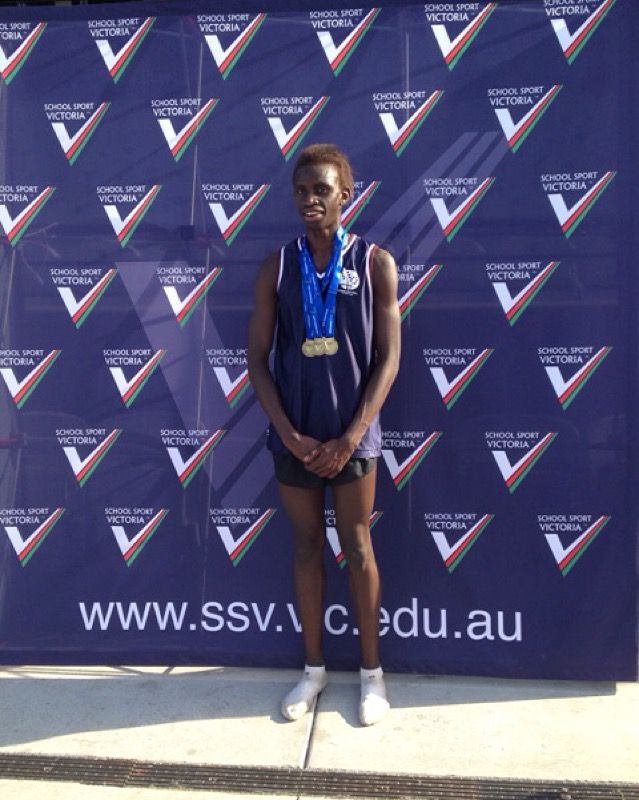
A young Kang Nyoak cleans up at a School Sports Victoria carnival.
A further 3rd place finish at the national carnival had him dreaming big, “after that year I really wanted to give my education and running a chance, so I started to think about going to a private school,” he says. You can hear the passion in his voice.
He would spend the summer of 2015-16 training under the tutelage of Mick Whiteoak at Knox, whilst he continued his relentless bid to attend a private school.
“I started looking into Wesley and I emailed them but I didn’t get a response… Eventually they told me they had run out of scholarships.”
Nyoak was in no position to afford a private education, describing the financial stress his sporting ambitions were placing on his family, and crediting Wheelers Hill Secondary College for funding his early success.
“I was making the teams but we were finding it hard financially,” he says.
“We were renting at the time. Mum is unable to work due to arthritis in her hands and dad was still in Ethiopia. At the same time we were sending money overseas to support relatives with money for food to ensure good health.”
Wesley seemed a distant world away.
Enter Tim O’Shaughnessy.
O’Shaughnessy, the Head Coach of athletics at Wesley College, details the day Nyoak approached him in 2015.
“I asked him why he wanted to come to Wesley and he said because he believes it’s the best chance he has to get an education and make something of his life,” he says.
“He didn’t say it would be cool because we are in the APS and we have a lot of good runners, it was purely based on education.”
On the back of his own initiative Nyoak would eventually land a spot at Wesley and commence Year 10, a seemingly unbelievable feat from his prior “bad boy” attitude at Wheelers Hill, and a lifetime away from lunchtime soccer in Ethiopia.
“I found it challenging at the start academically, the standard was so high. But I’m really self-motivated; once I decide to do something I fully commit to it and always want to be the best at what I’m doing,” he says.
“I needed to catch up on the education I had lost.”
Whilst the new kid on the block at Wesley was tenacious in his pursuit of academic success, he would have an immediate impact on the sporting fields.
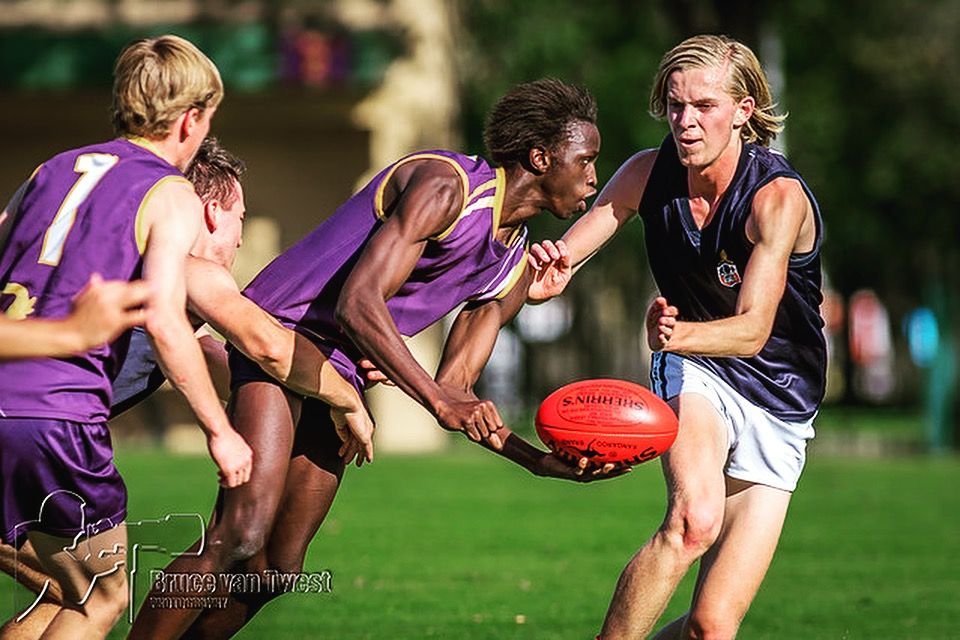
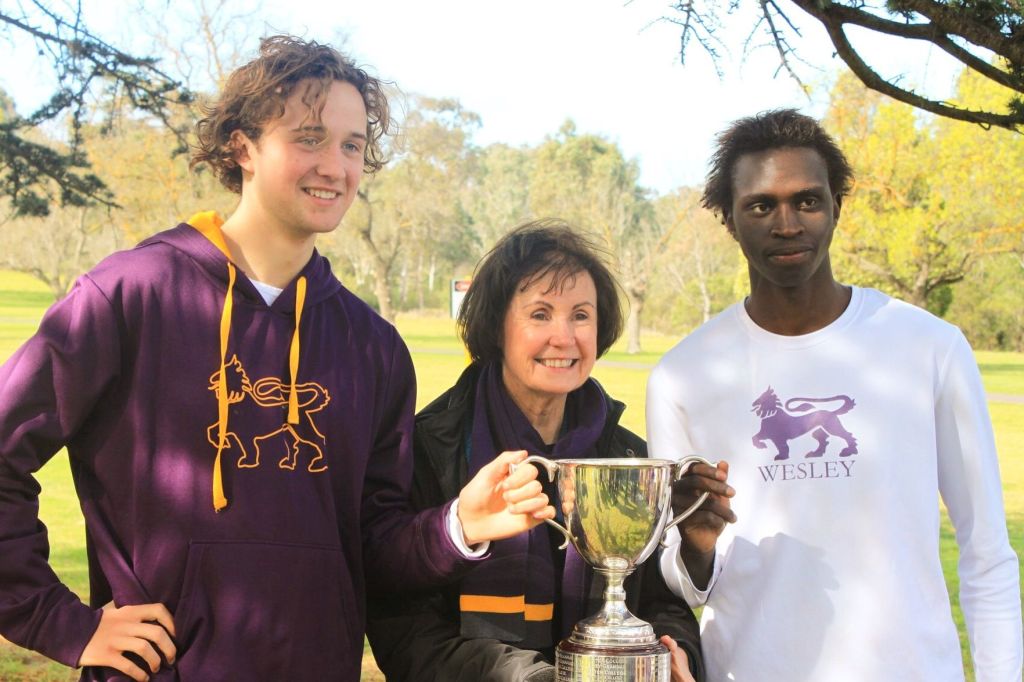
Kang Nyoak in action for Wesley in the APS Football competition. Photo: Bruce van Twest.Kang Nyoak with close friend Adam Spencer after securing the APS Cross Country Premiership.
“My first time at Wesley I played football on the Friday night and had APS cross country on the Saturday morning,” he says.
In typical Nyoak fashion he won them both. He reflects on these times with a grin, grateful that sport assisted him with fitting in at his new school.
So when people invested in Nyoak’s life in terms of schooling and athletics, he was hell bent on not letting them down. From nearing the point of dropping out of his schooling career in the early days, his appreciation for those who had helped him shone bright at Wesley.
In Year 11 he elected to commence IB (International Baccalaureate), widely regarded as a more intensive and demanding course than VCE. His reasoning? “I simply wanted to challenge myself.”
Nyoak’s unwavering commitment to his schooling became clear in 2017, when the then Year 11 student turned down an opportunity to represent Australia at the Oceania Athletics Championships so he could focus on his studies. But when the chance to attend the 2019 installment emerged, Nyoak arose from the pack and plucked it with two hands.
“I had never dreamt of representing a country so it was an easy choice, I had to take it and use it as a building block,” he says.
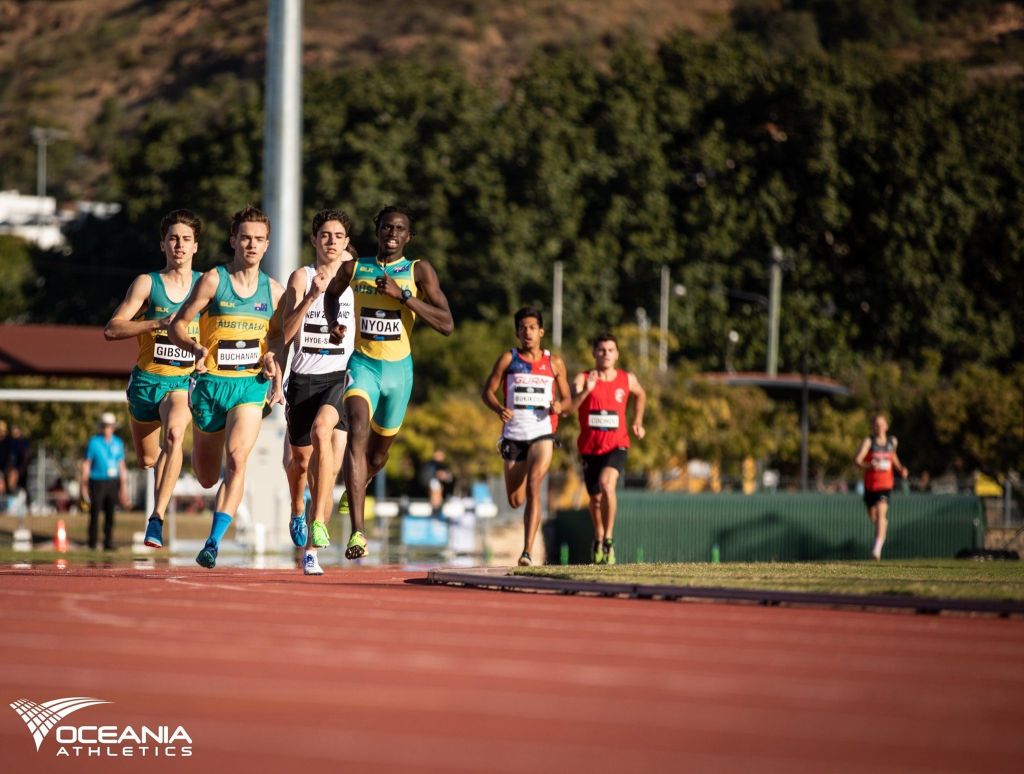
Kang Nyoak leads the charge for Australia at the Oceania Athletics Championships.
The young talent had been living life in the fast lane, grasping every opportunity on his road from Ethiopia and always willing himself towards his next goal. This dogged mindset has become the norm for Nyoak, and he is determined to leave no stone unturned.
“My message for other people would be to not settle for what you have been given or where you’re at in life, always strive for more,” he says.
“I don’t like getting too comfortable, I always set myself the next goal because it keeps me going.”
Excluding a tendency to sleep in, Nyoak’s trailblazing journey at Wesley made him the perfect candidate to return post-school as a coach to share his knowledge of both athletics and life, a reward that he says has helped assist his family financially.
“I feel like I can help support my family. When I used to play footy there was the incentive that if I made it I’d be able to help my mum easier,” he explains.
“My mum told me not to do it for her, but to do it because I love it and it helps me better myself.”
Nyoak’s bond with his mum is unrivaled, a connection that is a direct result of their hardships and mutual interest to seek a better life better for each other. But having not seen his dad since his departure from Ethiopia in 2008, the void of a father-figure has been narrowed by the presence of Tim O’Shaughnessy.
“Whenever I need to make a decision I talk to Tim first. He has helped guide me along the way and is more than just a coach to me,” he says.
“One thing that separates Tim from many coaches is that he goes above and beyond. He acts as a role model and has time for everyone.”
Nyoak even details times when he has been injured and O’Shaughnessy has visited him to check in on how he is going. He also credits O’Shaughnessy for his experience in an elite training environment in the form of opportunities with the Melbourne Track Club, headed by Nic Bideau and comprised of the majority of Australia’s best distance athletes.
Kang Nyoak in action on the track.
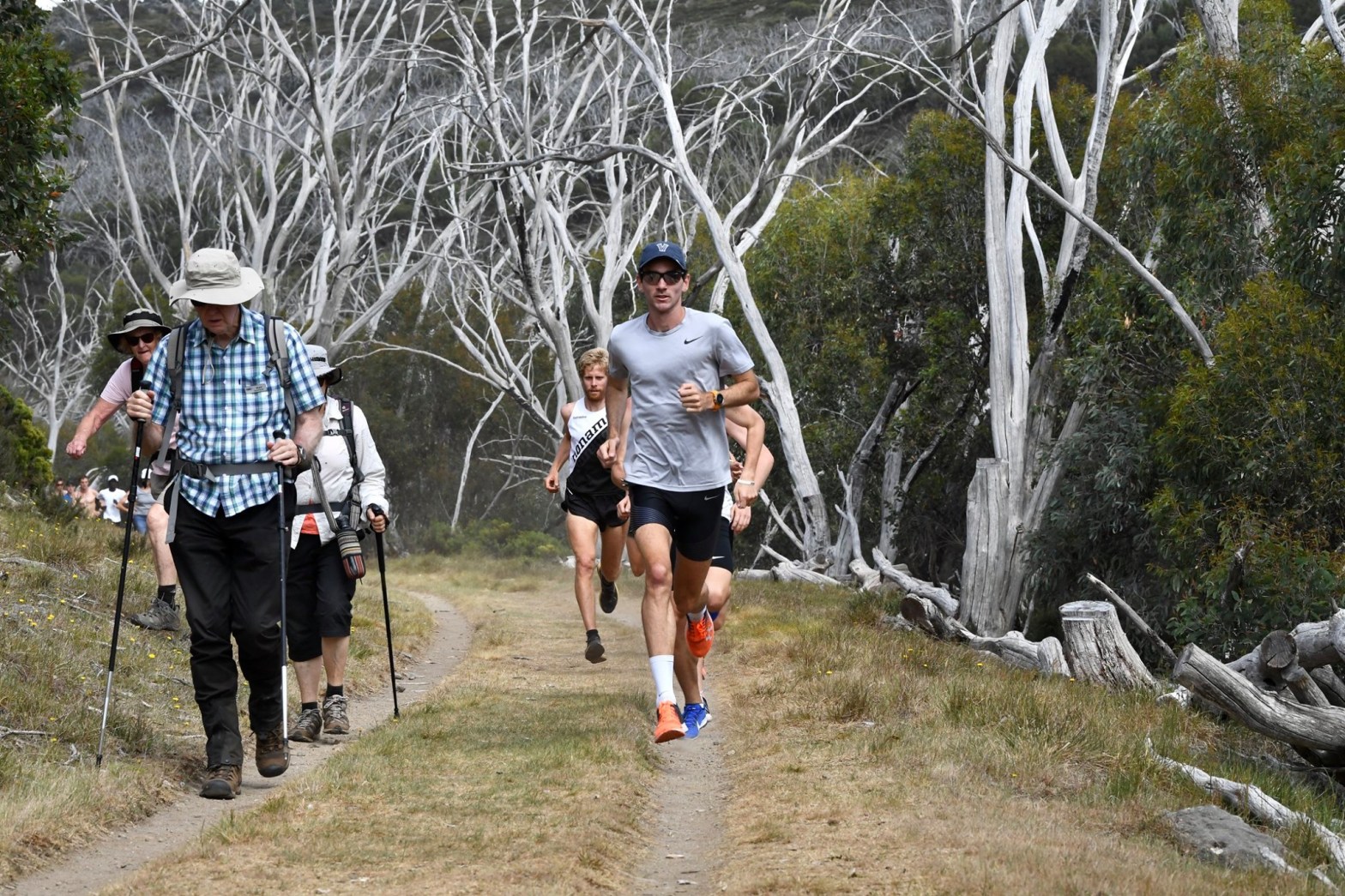
In November of 2019 Nyoak attended an altitude training camp at Falls Creek with the Melbourne Track Club, an experience he describes as invaluable. Whilst the Ethiopian-born was familiar with the altitude, he was less fond of the snow, saying his body didn’t enjoy its first experience in the sub zero climate.
“The environment was very welcoming. They didn’t treat anyone differently, everyone was just equal and it didn’t matter how fast you ran there was just good banter,” he says.
“It helps having them around as I look up to them and they are where I want to be one day.”
“It’s good to talk to them because they are the best at what they do, and I can understand the process to get to that level.”
In particular, Nyoak makes mention of Australian 10,000m record holder Stewart McSweyn as a role model, admiring the patience and consistency that has led to his success.
With the adversity of his life forcing him to develop a mentality and skill set far greater than most in society, Nyoak is planning the next chapter of his life which is set to take place at college in the USA.
“It is too simple for me to just stay here. I can get more opportunities for my education and running over in America, along with exploring the world,” he reasons, adamant that staying in Australia is not an option for him.
The prodigy’s preparation has been thorough, including picking the brains of training partners Jordan Williamsz and James Coleman, who have both utilised the NCAA system as a launch pad to the upper echelon of Australian distance running. Nyoak has also constructed lists of pros and cons of countless colleges.
Kang Nyoak and James Coleman discussing colleges. Photo: Riley Wolff.
His goal at college – to run fast? That’s a given, but Nyoak’s emphasis on academics remains fixed.
“The biggest goal for me at college is academics because no one can take that away from me,” he declares.
“My goals in running would be to break the Australian indoor 800m record (held by Joseph Deng), to win NCAA championships, and in the long term make the Olympics.”
It’s no surprise that Nyoak has such big ambitions. The 20-year-old has conquered every challenge in his life to date and sought more on his own accord. His journey could have been vastly different, but every time he has met a roadblock he has found a way over, around or through it.
“I’ve worked so hard to get where I am at the moment. I have chosen to control my own life. Always set yourself a goal, even if it takes 10 years it will keep your mind active,” he closes.
There is no denying that Kang Nyoak is a class athlete – everyone knows that. But he is also one hell of a bloke, and his qualities as a person will eternally surpass his athletic ability. So next time you see him at the track, think not ‘Kang Nyoak the athlete’, but instead ‘Kang Nyoak the man.’
When world-class athletes race at the local athletics track – you go and pop your head in. But when the surrounding racing is not far off that mark – you strap yourself in for a long night of athletics.
This was certainly the case at Box Hill’s Hagenauer Reserve on Thursday night with the third installment of the Victorian Milers Club serving up a highly anticipated night of middle distance running.
With 435 entries and 34 races, the program was overflowing with contests that promised to produce fast times, along with some mouth-watering matchups and storylines.
The entries were headlined by the names of Geogria Griffith, Morgan Mitchell, Peter Bol, Joseph Deng, Sam McEntee and Jaryd Clifford (just to name a few). The quality of these athletes would be complimented by numerous interstate visitors and of course the very best local and junior talent.
Whilst the rivalries at the elite end are well publicised within the running fraternity, the same principles are instilled right throughout the heats. This saw training partners, friends and rivals shape up to secure the all-important bragging rights.
The lower grades of the 800m races set the scene for the evening by delivering some tight finishes that excited the growing crowd, regardless of the time on the clock. Just pure racing.
The structure of the 34 race program ensured the event would reach its climax around some of the very best middle distance runners in the country, as the crowd’s undivided attention turned to the track.
Having the elite talent racing was impressive but arguably more impressive was the depth on display across the program, there were masses of very quick runners.
How many? Well, 42 blokes breaking the four-minute-barrier for 1500m is a decent start.
There were some outstanding performances over both 800m and 1500m. Here’s how it unfolded:
You can replay the event thanks to Athletics Exclusive here.
Thanks to the Deol Family for their excellent photography.
MEN’S 800M A
Freaks of Nature
Where do you even start to look here?
Hagenauer Reserve just about froze to watch the absolute cream of local men’s 800m talent do their thing over two laps, even the wind stopped.
Isaac Hockey held the fastest seed time in a very high quality field.
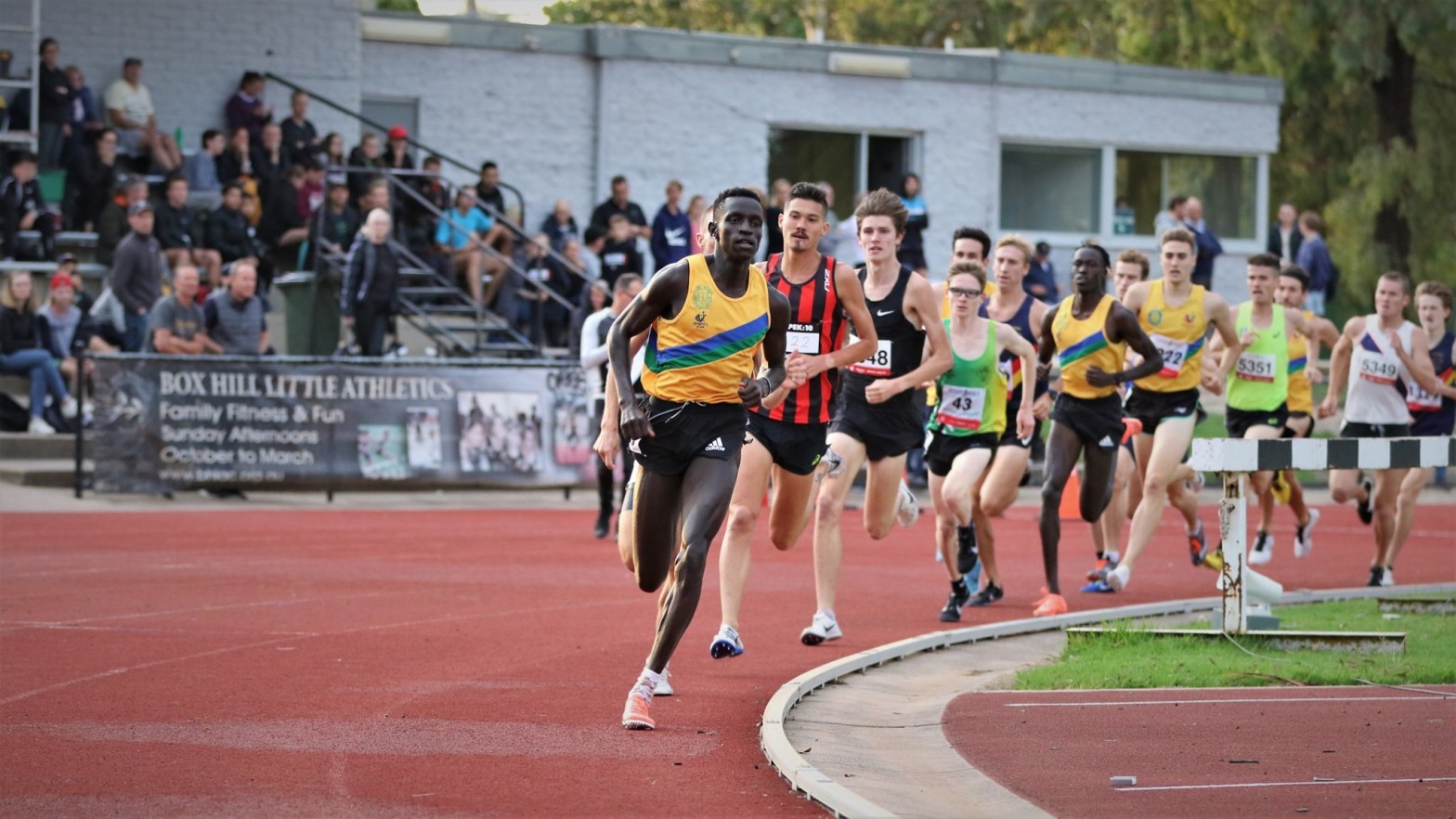
Crawford would aim to set the pace for 53 seconds through the bell and a scrambling start saw numerous athletes vie for his back, resulting in a messy first 200m.
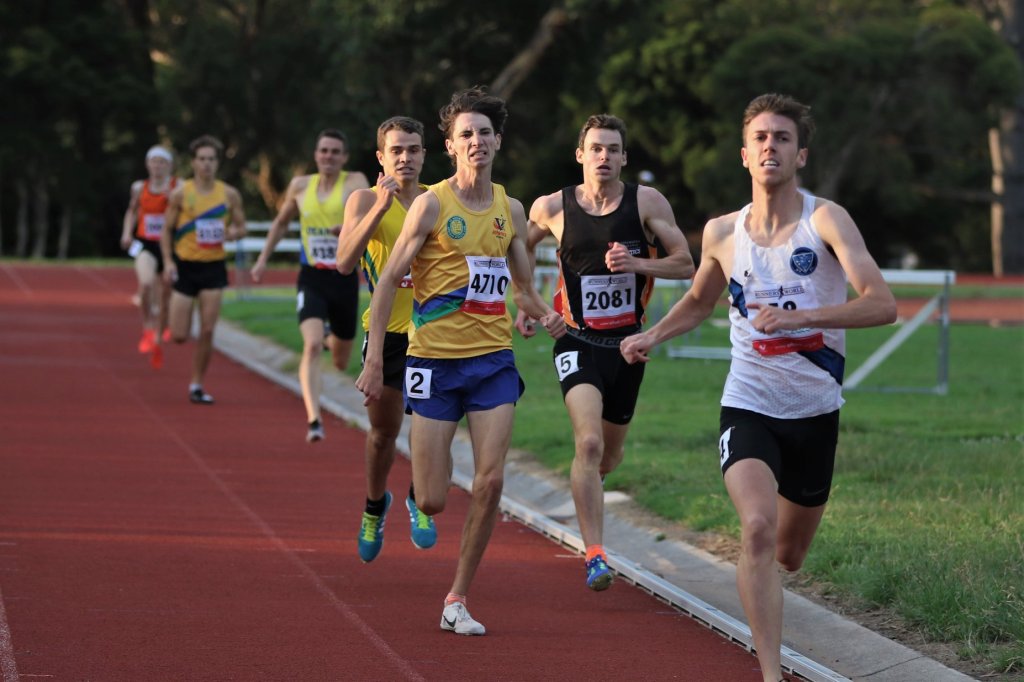
As the field settled down it would be Hockey and Hansen in charge, with Luke Shaw and Jack Lunn tracking their every move.
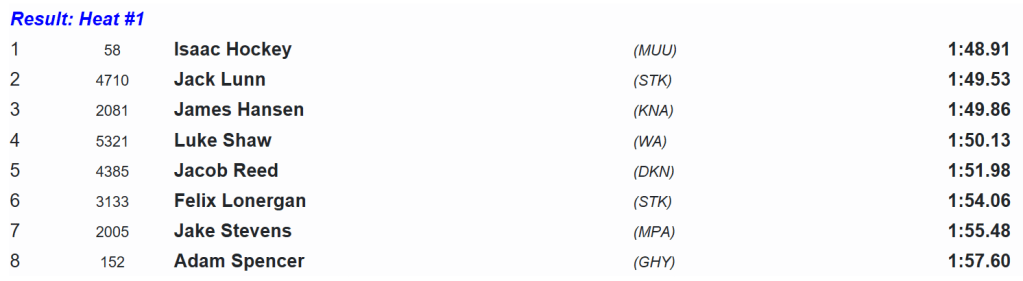
Hockey roared away from the field early on the second lap to possess an unassailable lead for an athlete of his class, rounding the home bend and clocking a blistering 1:48.91 – the fastest 800m time in the world this year.
Hockey’s run was almost overshadowed by the run of Jack Lunn, who finished in 2nd place.
Lunn, a member of Steve Fabris’ ‘Rising Track Club’, entered the night with an impressive 1:51 PB which he ran solo at an APS meet.
However, Lunn would raise the bar again to go home with a new personal best after a superlative last lap in which his long-striding technique would carry him to a jaw-dropping 1:49.53.
Not to mention he’s still an U20, and it might be reasonable to start dropping the name of that country starting with ‘K’ soon.
It is typical of athletes to slow down in year 12, but not Jack Lunn. Definitely one to watch.
James Hansen also snuck under the 1:50 barrier with 1:49.86, whilst Luke Shaw was less fortunate in running 1:50.13.
WOMEN’S 800M A
Hometown Hero
There were only five starters in the premier heat of women’s 800m events for the night, but this event was no farce.
The small field would be headlined by Doha representative Geogria Griffith and Olympian Morgan Mitchell, two of Australia’s finest 800m talents.
Reigning U20 Australian Champion over 800m, Sophie O’Sullivan, would also toe the line in a bid to match it with the elite, fresh of signing with the University of Washington.
The field would be rounded out by Gigi Maccagnini and Tasmania’s Nicole Perry.
Shanie Landen was on pacing duties and had the field segregated early as she set an even tempo for 60 seconds through the bell with Griffith, Mitchell and Maccagnini all in contact.
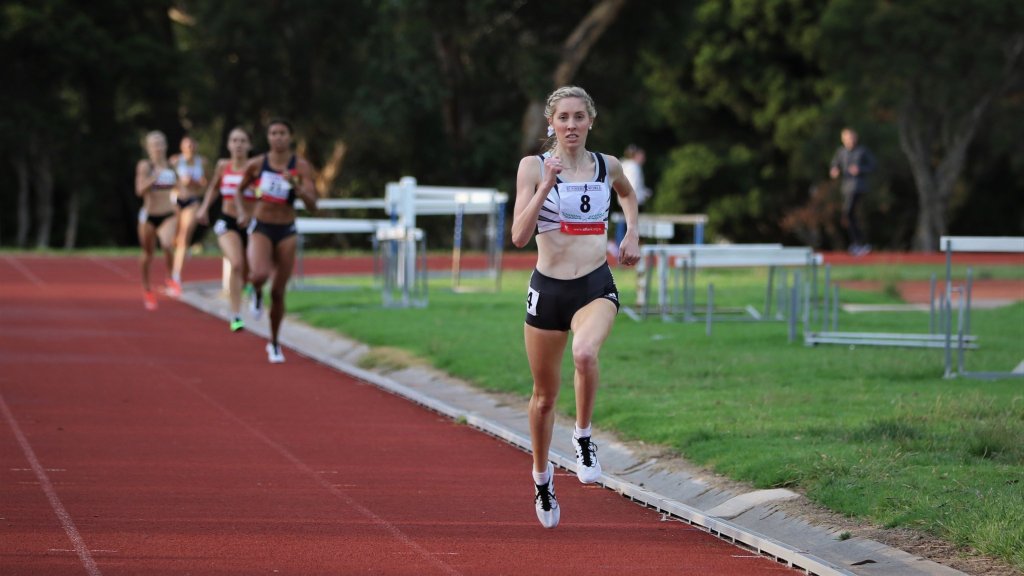
As Landen veered off the track with 300m left to run, Griffith started to extend and looked full of running as she shot away from the classy field.
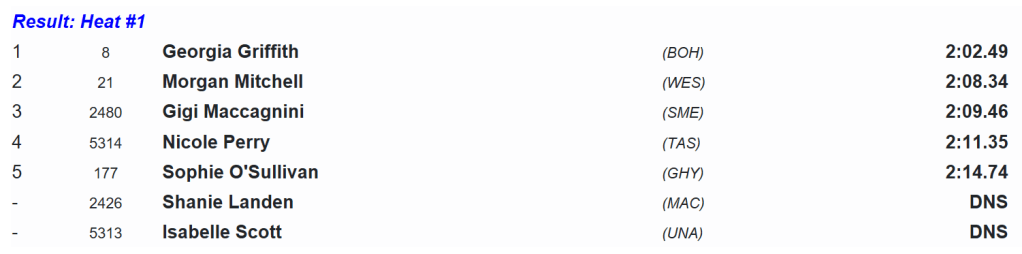
A barnstorming finish from Griffith would see her stop the clock at 2:02.49 – an incredible time for Box Hill on a windy night whilst doing the last 300m solo.
Mitchell finished in 2nd placing in 2:08.34 in her first 800m outing of the season, ahead of Maccagnini in 3rd.
Perry displayed some strong form over the last lap to finish ahead of O’Sullivan, who felt the pinch from a hot early pace. With just the five starters and a demanding early pace these girls did a mountain of work, look for them to improve significantly in a full field next meet.
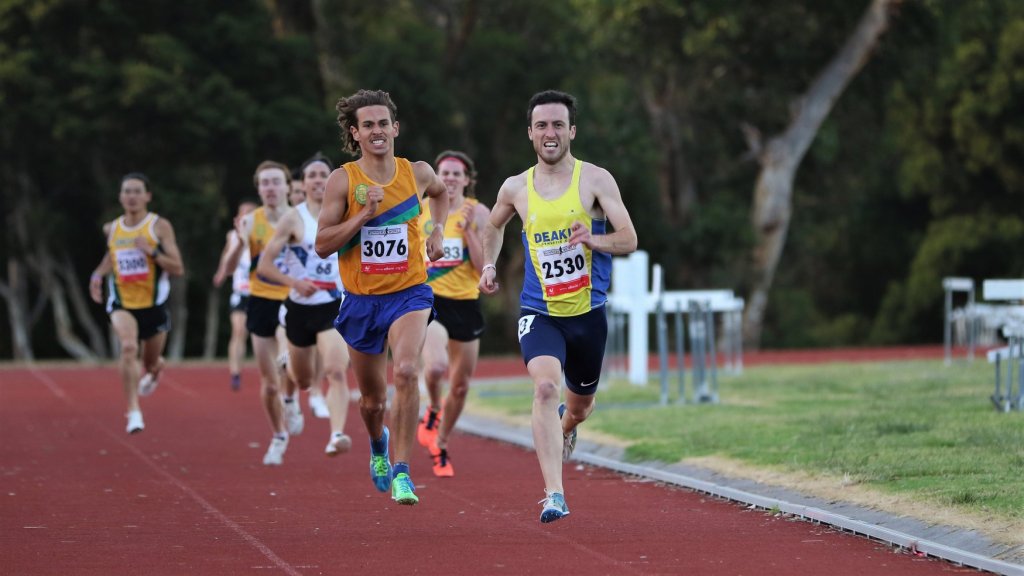
MEN’S 1500M A
Pete Brings the Heat
It can be hard to sway the attention of eager-eyed fans from the clock, but a stacked field in the premier event of the night ensured that the racing was the main draw card.
Pacemaker Alex Beddoes assumed control on the blustery back straight as the field got off to a clean start.
Sitting nicely behind him would be rising star and New South Wales visitor Luke Young, trailed by a nonchalant Peter Bol. Jospeh Deng and Jaryd Clifford would sit back, with Sam Mcentee and Matthew Clarke midfield.
As Beddoes peeled off with 700m to travel the race got underway, with Bol the pilot ahead of Josh Johnson and ‘Fast8TrackClub’ teammate Joseph Deng after an audacious move into the breeze. The star-studded field was still in contact.
This all-star 1500m race would turn into a 400m race, with very marginal handicaps.
The bell urged Bol to inject some venom into the race, as Matthew Clarke and Jarryd Clifford launched their onslaughts in hot pursuit. McEntee had similar ideas, albeit from lane two. Johnson still prominent.
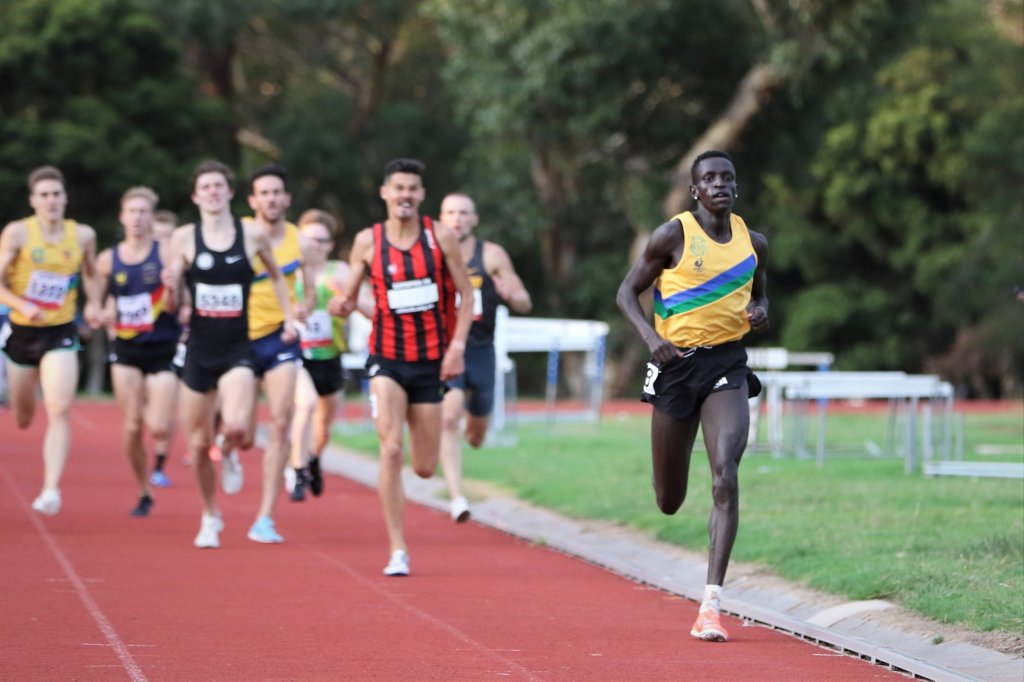
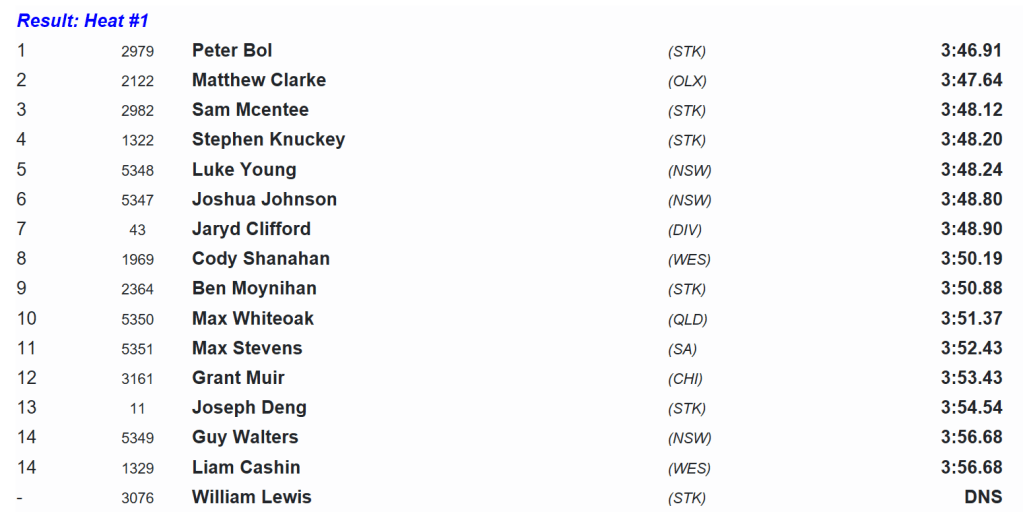
Bol extended down the back straight to just about tear the field apart. He opened up emphatic lead which allowed him to enjoy the home straight and jog across the finish line in 3:46.91, closing his last lap in 56.1 seconds.
Peter Bol wins the Men’s A 1500m ahead of a stacked field at the Victorian Milers Club last night. He closed in 56.1 to clock 3:46.91 in blustery conditions. Event report soon. @fast8trackclub@pbol800pic.twitter.com/42Fc9otYMP
Clarke would work his way into 2nd placing with a scintillating last lap to disturb the St Kevins trifecta, with Mcentee digging deep to advance from 10th place to 3rd over the last lap despite running wide.
The smooth-moothing Stephen Knuckey displayed a superb turn of foot to progress from 8th position with 200m to travel to 4th across the line – finishing a convincing stint over the longer trip for the 800m man.
It wasn’t Deng’s night but the young talent will undoubtedly bounce back soon under the tutelage of Justin Rinaldi.
Two-time World Champion Jaryd Clifford opened his season with a handy 3:48.90 to finish ahead of Milers staple Cody Shanahan.
The results were peppered with big names in a ridiculously classy field, a credit to Australian running and the Victorian Milers Club.
WOMEN’S 1500m A
Intruder Alert
Seeing Catriona Bisset on the start line may have been a rude shock for some of the competitors, but her presence was good news as the Australian record holder agreed to take the field through 800m (she would not be going through in 1:58.78).
Bisset would aim to send the field on their way to a 4:14.
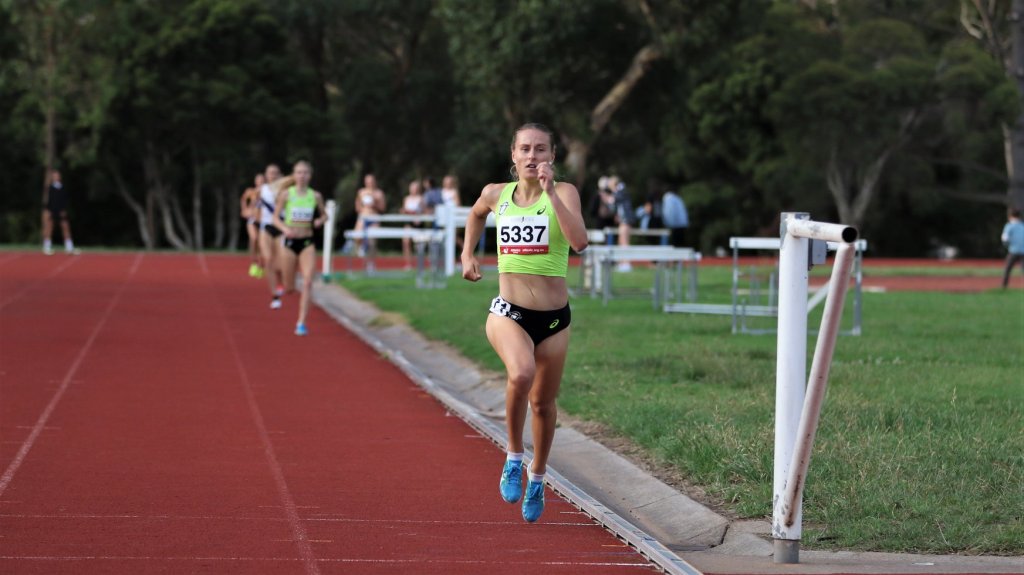
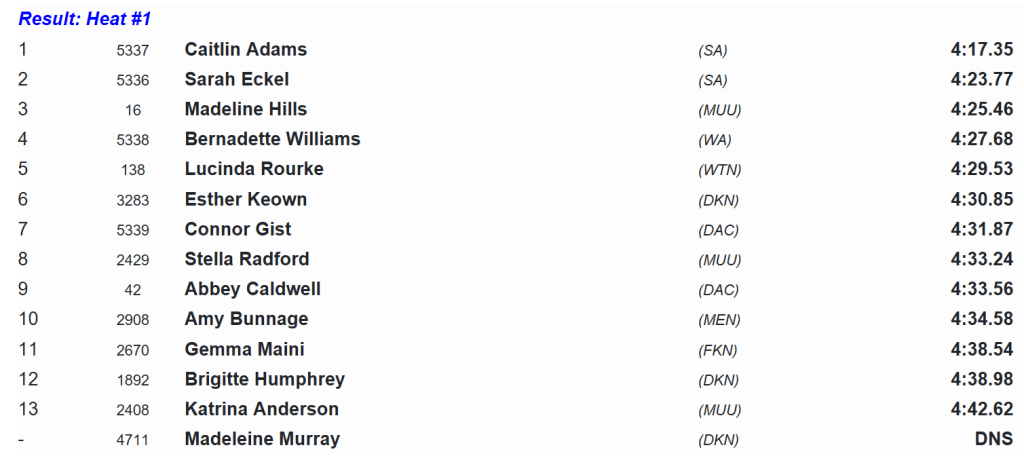
Emerging talents Amy Bunnage and Abbey Caldwell would dabble in the early pace before Caitlin Adams made an assertive move to join Bisset at the front, as the two gapped the field.
Hunting them would be Bernadette Williams leading the charge of Sarah Eckel and Madeline Hills with the trio attempting to reign in the leading pair.
As Bisset completed her duties Adams was left out on her own with a hefty lead.
Adams tore the track up over the last lap to obliterate the field and secure a big PB of 4:17.35, followed by fellow South Australian Sarah Eckel and Madeline Hills in third placing.
Lucinda Rourke would close the best of the rest over the last lap in an impressive performance, running 4:29.53 and taking a scalp or two along the way.
MEN’S 800M B
B is for Beischer
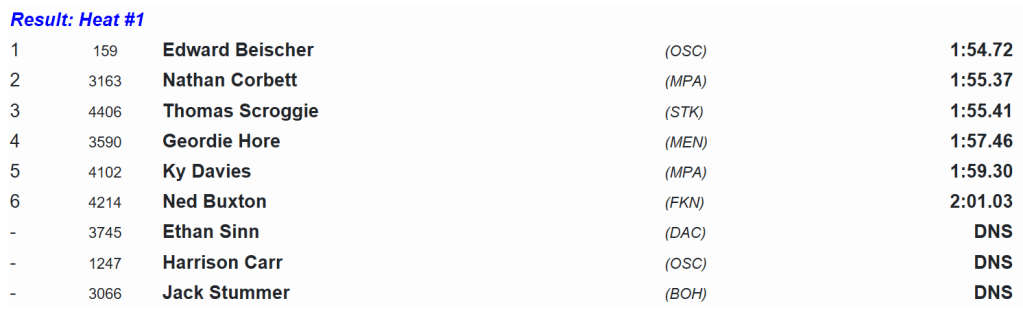
Multiple scratchings meant only six athletes would compete in the second fastest of the 800m heats.
St Kevins/RisingTC product Thomas Scroggie flirted with the early lead but it would be Mentone’s Geordie Hore who ensured the pace was on for an honest race.
Hore led Ned Buxton and and Nathan Corbett through the bell whilst Beischer and Scroggie settled near the rear of the small field, with Ky Davies being able to see them all.
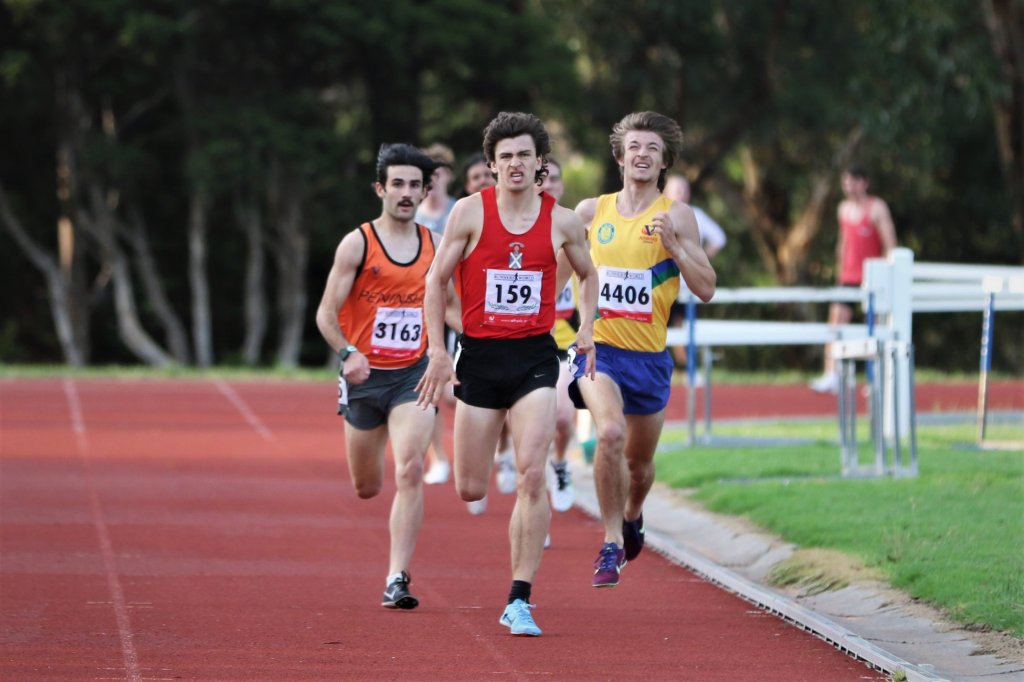
Hore’s lead was short lived as Scroggie made a decisive move down the back straight, with a watchful Beischer responding and catching his back. Corbett also mustering well to stay in contact.
Scroggie towed the trio into the home straight before starting to tie up as Beischer lengthened and sailed away from the field in a confident display.
Corbett fought hard to pip Scroggie on the line, and early race leader Geordie Hore finished in 4th in respectable time.
Mornington’s Ky Davies snuck under two-minutes ahead of Nex Buxton who rounded out the field.
WOMEN’S 800M B
Remember the Name
The significant depth on display at Milers Club was evident in this heat, with a number of girls racing who would hold their own in an ‘A’ race.
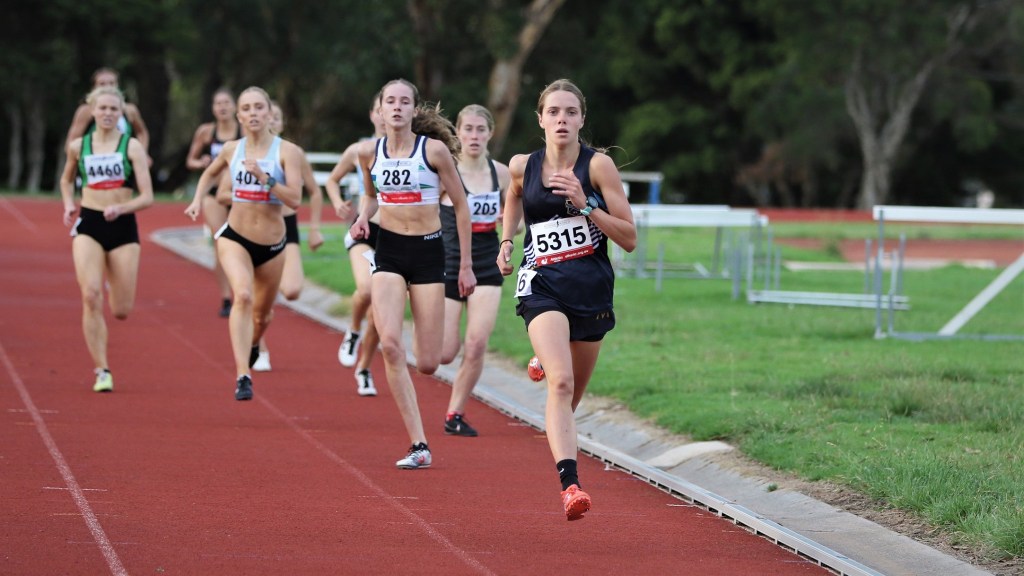
There was a hidden gem in this event. A relatively unknown Claudia Hollingsworth would come out of the woodwork to try her hand at Milers Club.
The 14-year-old from Mentone Grammar recently registered an eye-catching 2:43 for the 1000m at Athletics Australia’s All Schools Nitro event.
It’s fair to say Hollingsworth is new to the sport but has immense talent – she even had to ask her coach, Craig Mottram, how many laps the 1000m was prior to running. Keep your eyes on Claudia (pronounced cloud-ia) in the future, but for now she’s just enjoying her running.
With no pacemaker for the event, Lucy Leutchford found the top and led the tightly-packed field through the first lap.
Leutchford would maintain her lead past the 600m mark in a brave front-running performance, which was about to be cut short.
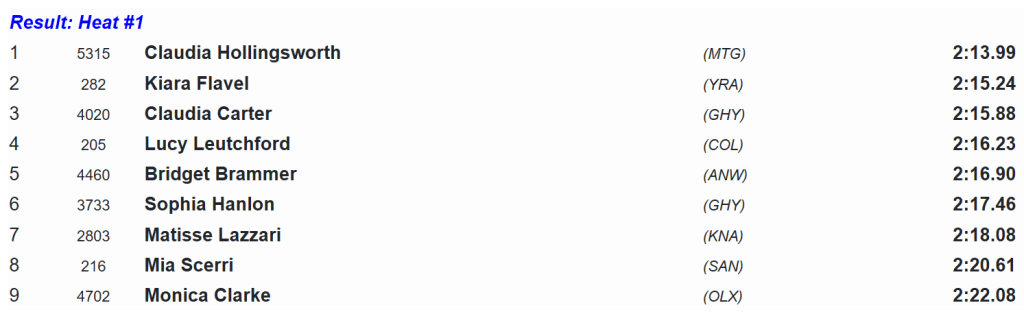
Hollingsworth was the first and last to go, effortlessly prancing her way to victory with seemingly ample left in the tank. She stopped the clock at 2:13.99.
Kiara Flavell made a booming late charge to secure 2nd placing, ahead of Glen Huntly’s Claudia Carter who ran well in her third experience over the 800m trip.
Early leader Lucy Leutchford was rewarded for her work with 4th placing.
MEN’S 1500M B
Dan the Man
Most athletes would put their feet up after running 1:54.72 and winning the ‘B’ heat at Milers, but not Ed Beischer. The tough Old Scotch runner returned to pace the 1500m ‘B’ heat, granting the entire field front row seats to his luscious mullet flowing in the breeze.
Josh Collins sat on the early pace, followed by Matthew Hussey, Lachlan Herd and Kang Nyoak as Beischer had the field strung out beautifully.
Herd was soon dictating the tempo as Beischer stepped off the track after 500m and the field started to bunch.
A drop in the pace saw the traffic increase and positioning became crucial as the athletes jostled for a prime spot come the bell.
Sam Williams would lead Adrian Potter through with one lap to go but the moves would soon come.
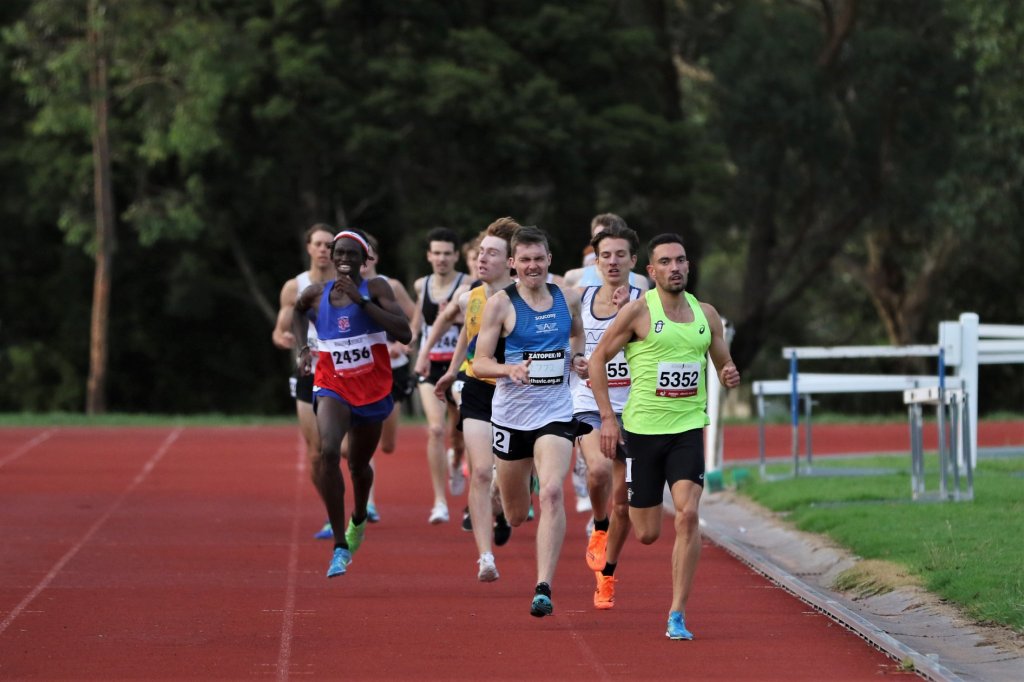
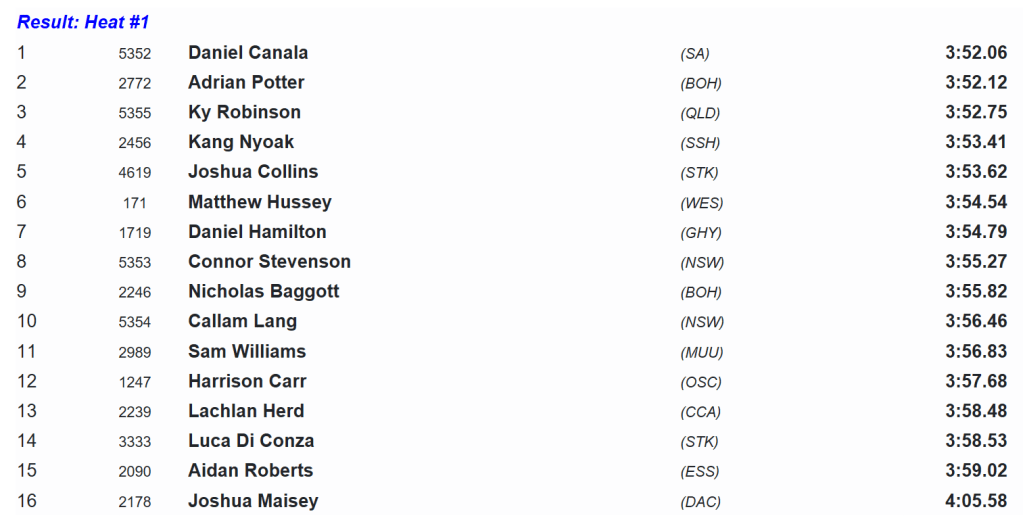
Canala showed the previously troublesome back straight no respect as he slammed on the accelerator into the breeze and grabbed the lead with 200m to run, with Potter looming ominously and Queenslander Ky Robinson running in third ahead of Josh Collins.
Collins looked tired, but he always does.
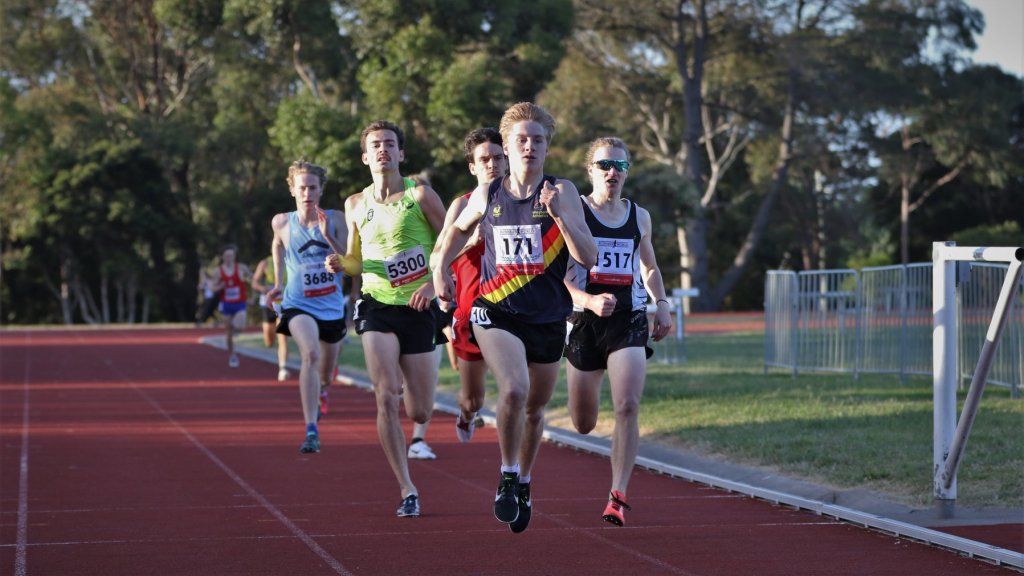
Meanwhile the class athlete of the field, Kang Nyoak, had just about made his own bed after some questionable tactics. But when most athletes would have said goodnight, Nyoak gritted his teeth to find a way back into the race to re-establish his relevancy on the top bend.
Canala and Potter would prove too strong in the run home, with Canala stopping the clock at 3:52.06 to secure the win ahead of Potter. They were followed in by Robinson, the fast-finishing Nyoak and a valiant Josh Collins.
WOMEN’S 1500M B
Connell is Clutch
Caitlan Adams was off the quick backup to ensure the girls in the ‘B’ heat were on track for their target times.
The fastest seed time in the event was Davina Smith and she slotted straight in behind Adams who led a compact field.
Adams would leave Smith with two laps to run and a resounding lead, as Mentone’s Kelsie Vickery was left in charge of towing the field back into the race.
Smith’s persistent pressure from the front was enough to fracture the field, as Lauren Connell and Ashlee Treagus transpired as the major threats.
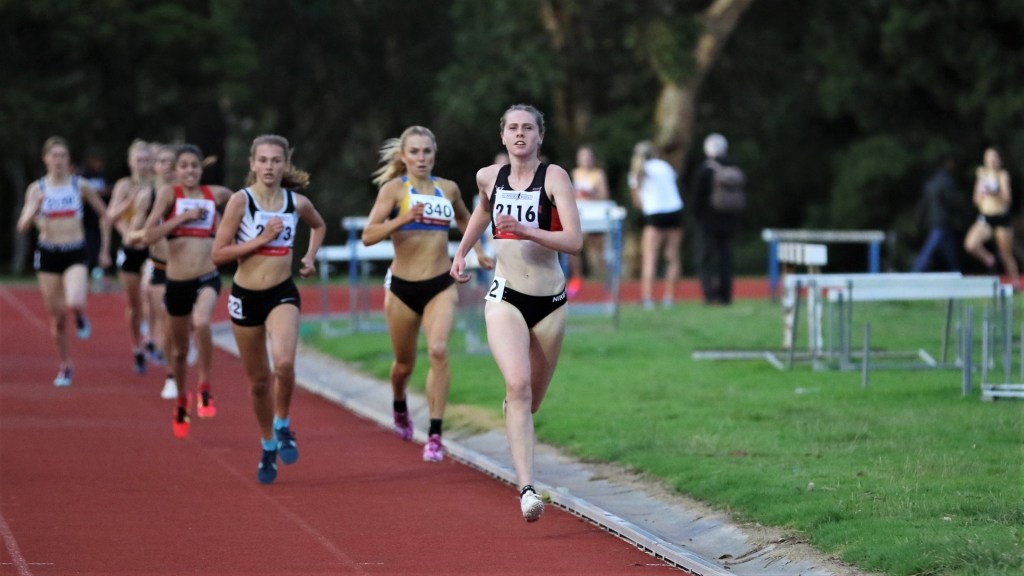
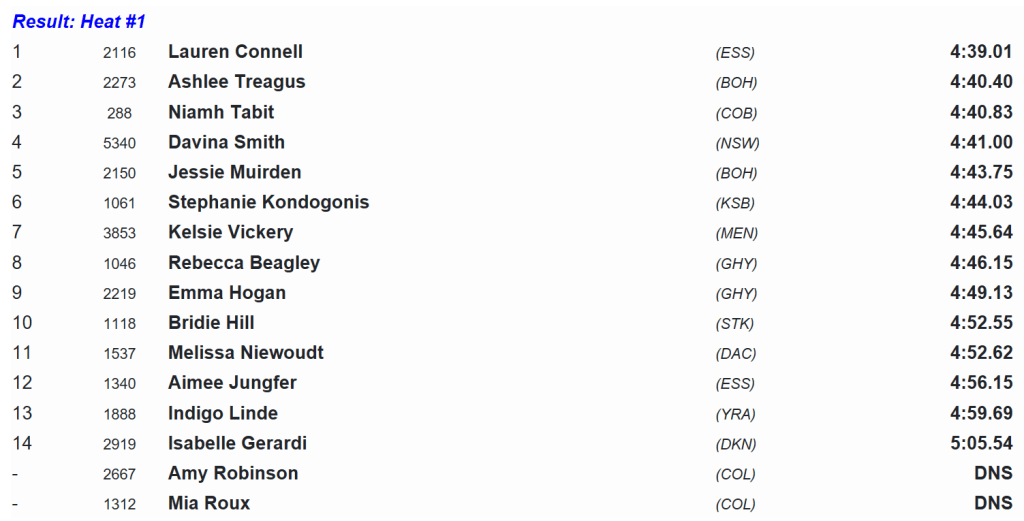
With half a lap to run it was still Smith, but Connell had warmed up the engine and made a commanding move to charge home and land a national qualifier along with the win in 4:39.01.
Treagus finished in 2nd ahead of Niamh Tabit, with Smith clinging on for a gutsy 4th placing.
MEN’S 800M C
A lot to C
There were 10 starters and some familiar names lining up in this encounter over 800m.
With no pace maker, it was Wolfgang Contra-Nemesi who crossed first and found the lead as the field lined up behind him.
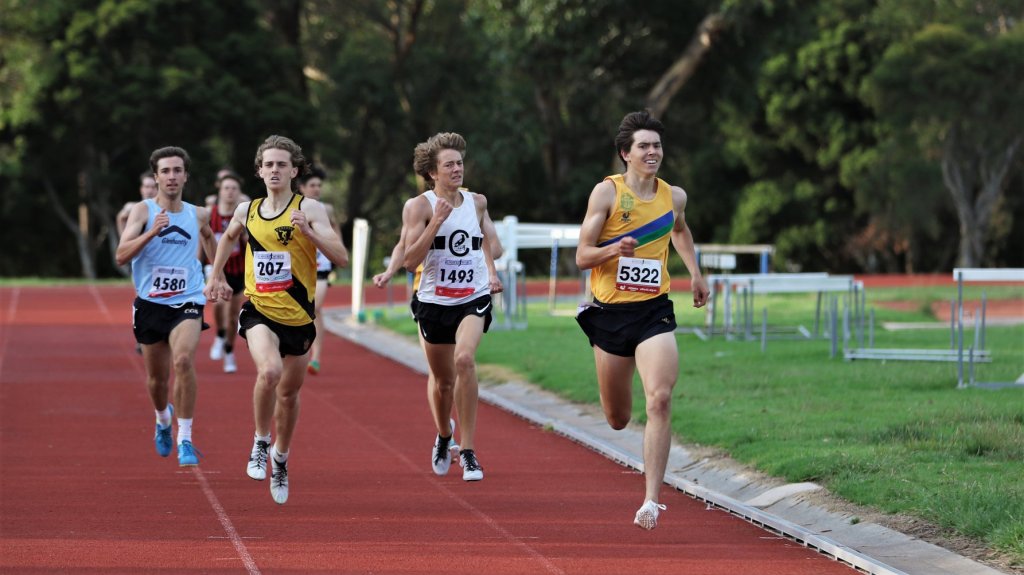
A sea of yellow trailed Contra-Nemesi, with Mentone’s Nikolaj Djordjevic and St Kevins pair Andrew Mathieson and Connor Lynch all prominent in the running.
Into the final lap and Contra-Nemesi took Djordjevic and Mathieson to the top of the home straight which would spell the end of his time in the lead, as Mathieson barged past him and Djordjevic pulled wide to challenge.
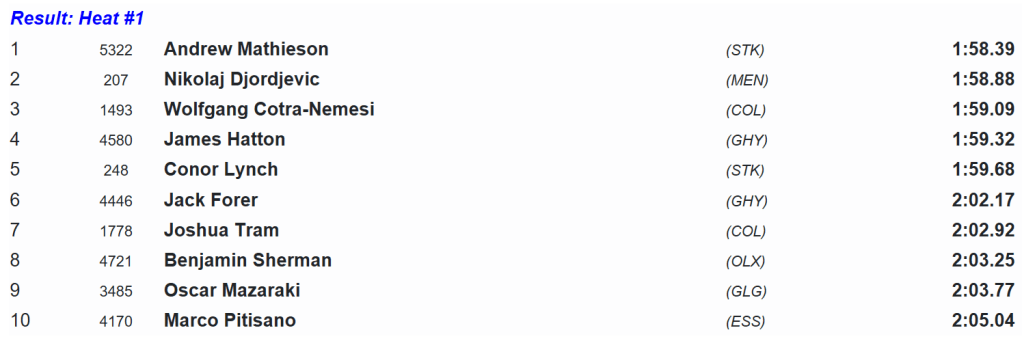
In the run home Mathieson would prove superior to record the win in a time of 1:58.39, ahead of Djordjevic and Contra-Nemesi.
Glenhuntly’s James Hatton put in an inspired performance over the last lap to break two-minutes, along with St Kevins’ Connor Lynch.
WOMEN’S 800M C
The Smiling Assassin
Approaching the business end of 800m races and on paper we had a diverse field, but they all held the common goal of running a fast 800m, and winning.
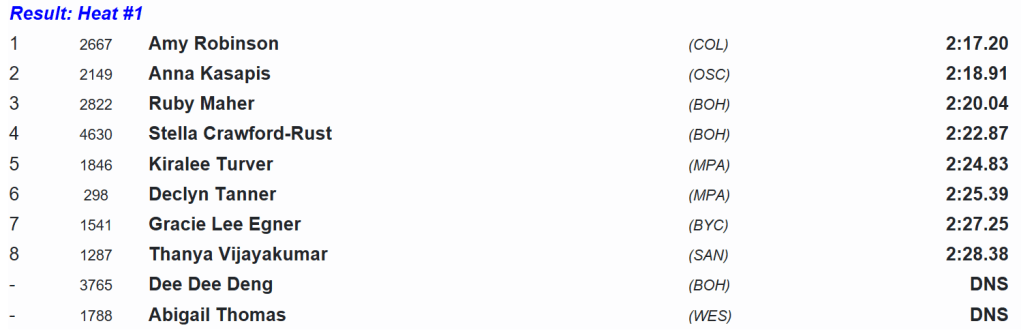
Former Victorian Champion over 800m, Anna Kasapis, demanded the responsibility of the pace from her younger competitors early on as the field set into rhythm.
The pace was on and the field was stretched out immediately with Ruby Maher and Kiralee Turver determined to go with Kasapis.
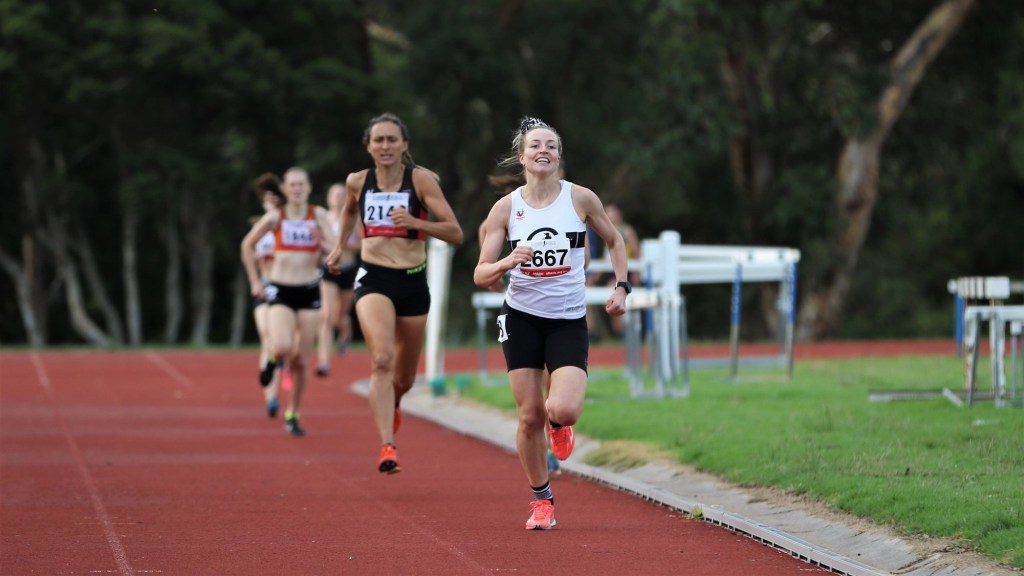
After some trouble at the back of the field it was Amy Robinson who laid her claims on the race with a forceful move to join the leading trio.
Kasapis appeared to be full of running into the back straight, opening up a convincing lead over Victorian cross country representative Amy Robinson.
The smiling Robinson would soon chop down the lead of Kasapis with a powerful burst over the last 200m to win in a time of 2:17.20. Kasapis would hold off Ruby Maher for 2nd place.
MEN’S C 1500M
Powne Town
Given the names in this field, you would be forgiven for not believing it was the ‘C’ heat.
There were some boys with serious wheels in this race and this was confirmed when Max Stevens led the field through the first lap in 58 seconds, the fastest opening lap of the night.
The field was well and truly strung out as a result and Stevens backed off the tempo on the second lap of his two-lap duty.
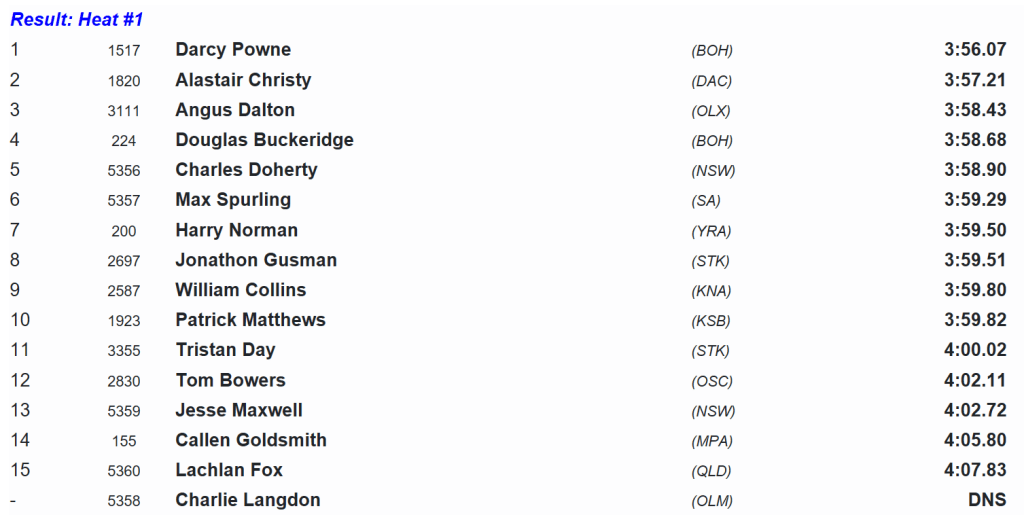
From this point it would be Doncaster’s Alistair Christy and South Australia’s Max Spurling who dictated terms as they approached the bell, with a host of chances biding their time.
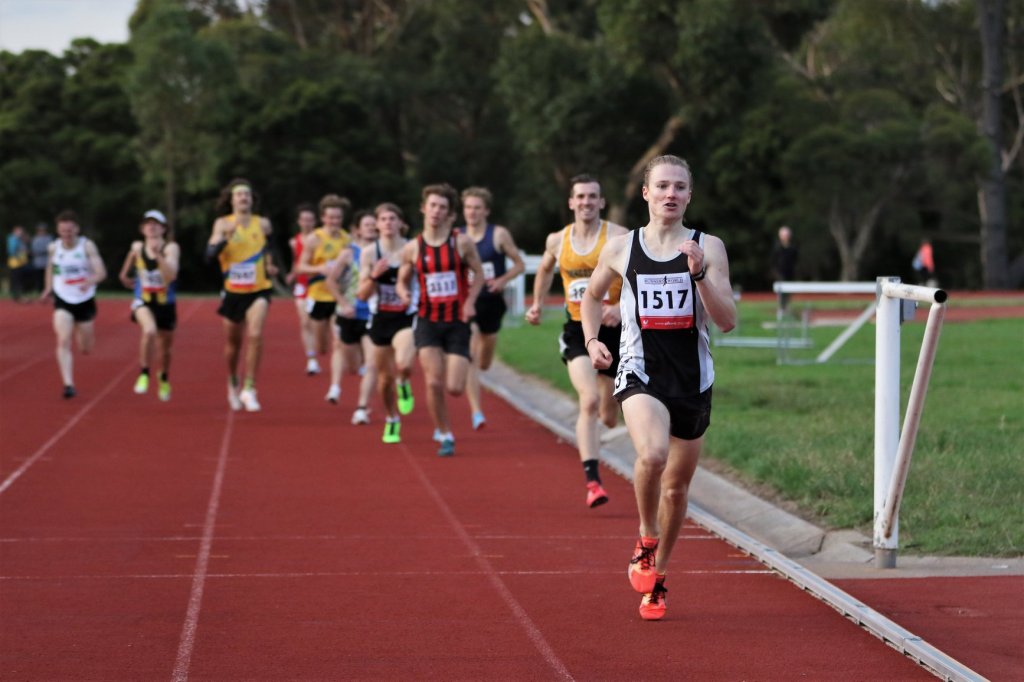
One of these athletes was Darcy Powne, who cruised to the lead with 300m to go, as Johnny Gusman simultaneously made a deliberate move after patrolling the rear of the field.
Will Collins was in 3rd placing down the back straight but was starting to tighten up.
Douglas Buckeridge channelled the agony of narrowly missing out on breaking the four-minute barrier in his previous start, launching himself into lane three and around the traffic as he cornered for home.
Powne floated down the home straight to beat all-comers in a dominant display and a time of 3:56.07, with Christy finishing off a terrific run for 2nd placing and Angus Dalton surfacing out of the group to pinch 3rd.
Buckeridge punched the air in celebration as he smashed the previously slippery barrier, running 3:58.68.
Justice was served in spades for Gusman, who shaved down his previous 1500m best of 4:06 to 3:59.
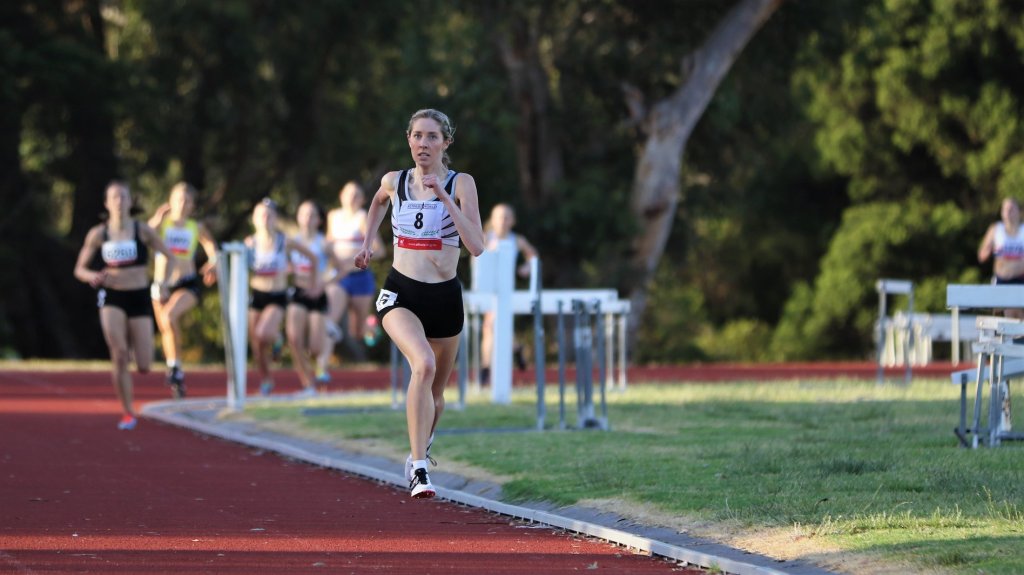
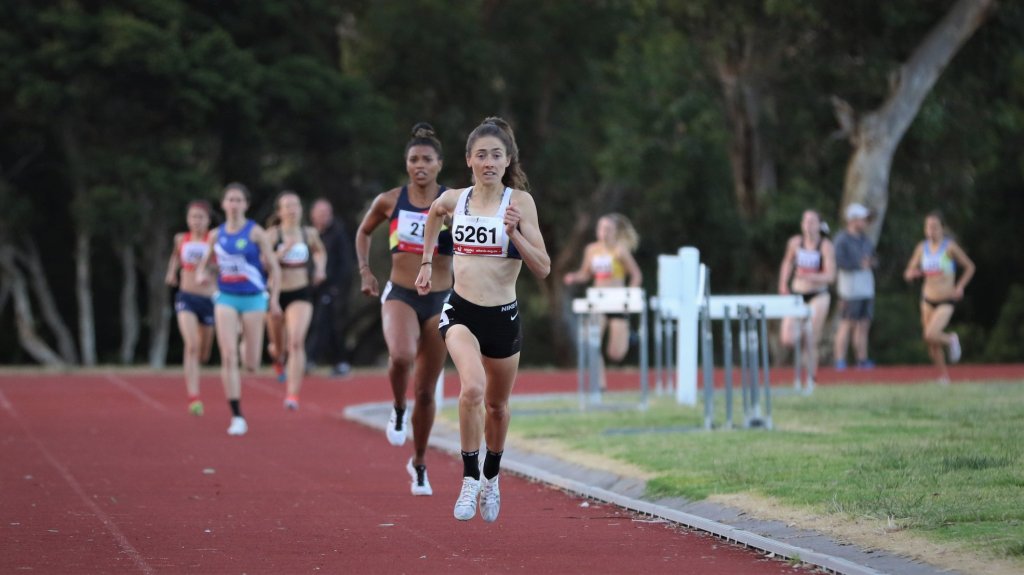
WOMEN’S C 1500M
Ring the Bell
On paper this race shaped up to one of the most competitive of the night based on seed times, and it did not disappoint.
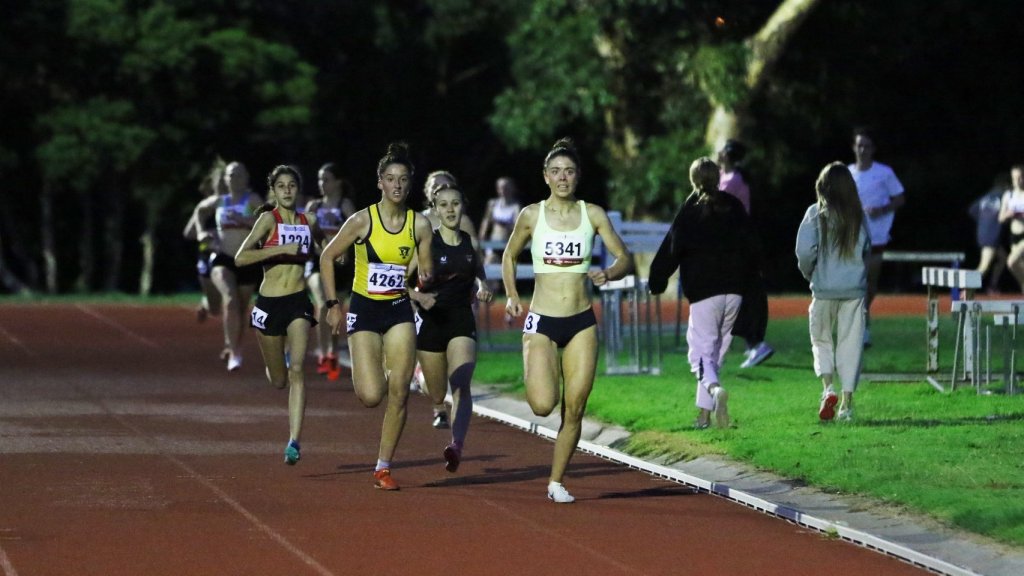
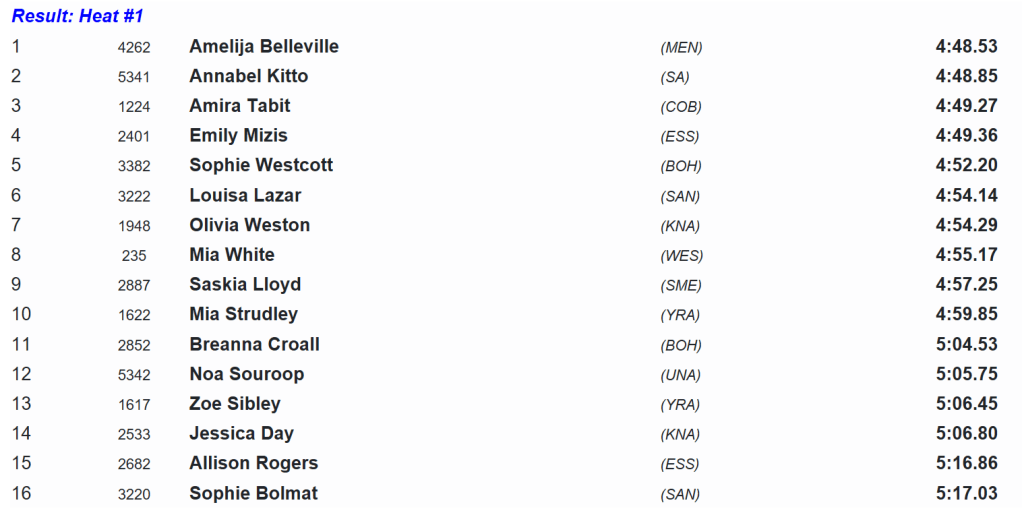
The fastest seed in the race was Emily Mizis who settled in third position early behind Mentone’s Amelijia Belleville and Melbourne Pack’s Noa Souroop. The fast-starting Souroop was returning after her ‘Encouragement Award’ in Meet 2 where she ran brilliantly.
South Australian visitor Annabel Kitto was cautious of the front group of Belleville and Mizis, running strongly to assist in closing the gap and dragging the rest of the field along with her.
The attacks came at the bell, with Mizis maneuvering onto the shoulder of Belleville who had led the whole trip, and was determined to keep doing so as she held the inside.
Mizis would soon find the front before Kitto pinched it and a break.
Belleville found her second wind as she pumped her arms and put her head down in pursuit of Kitto. Amira Tabit had seemingly appeared out of thin air with a blistering last 200m, and with Mizis still present it was a grandstand finish.
A dogged Belleville refused to go unrewarded for her early work at the front and found plenty in the last 50m to secure the win. She edged out Kitto who ran a terrific race to finish ahead of Tabit who flew home, and Mizis was next after laying it on the line.
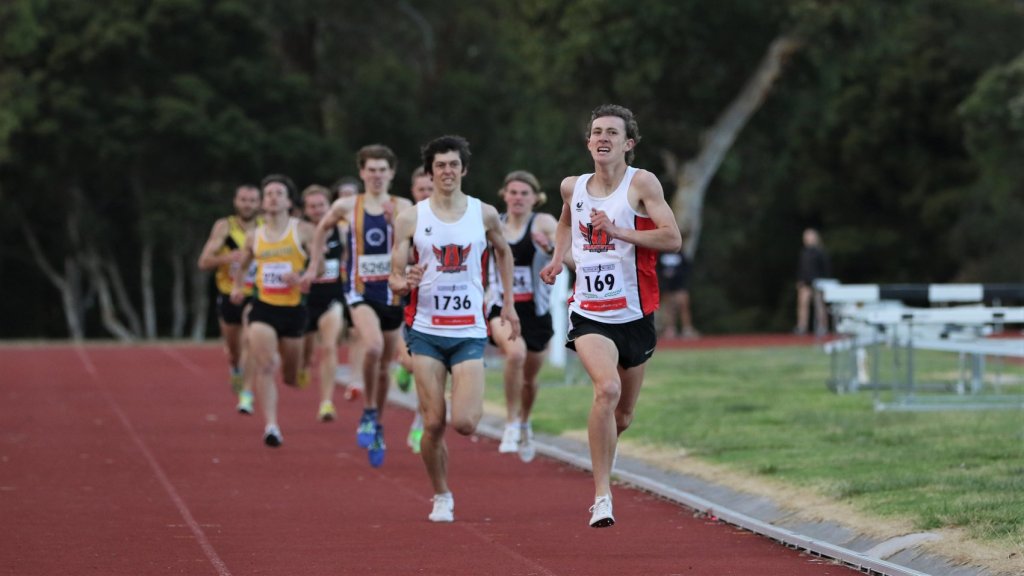
MEN’S D 1500M
Something in the Hair
With a flurry of sub-four-minute times in the preceding races, the field in the Men’s D 1500m were inspired to reach new heights, with none of the 14 starters having previously accomplished the feat.
There was plenty to look at in this event – Seth O’Donnell’s mullet, Michael Kernahan’s t-shirt tan, and the young duo of Will Garbelotto and Dharam Deol sporting Nike’s controversial Next% shoes (DQ them).
The workhorse that is Max Stevens raised eyebrows as he paced yet another race, with O’Donnell and Clayton tucked in nicely behind him throughout the trip.
Deol and Garbelotto trailed that pair wearing contrasting colours of Next%’ers to match their contrasting styles, with the shorter Garbelotto taking two steps for Deol’s one.
The race was set alight on the third lap with O’Donnell and Clayton pouring on the pressure and Caleb Sinn toiling hard to drag the chase pack back into contention.
The lead pair were well ahead, so much so that the chase pack might not have heard the bell.
So as O’Donnell and Clayton prepared to throw it down over the last lap, the rest of the field prepared to race each other.
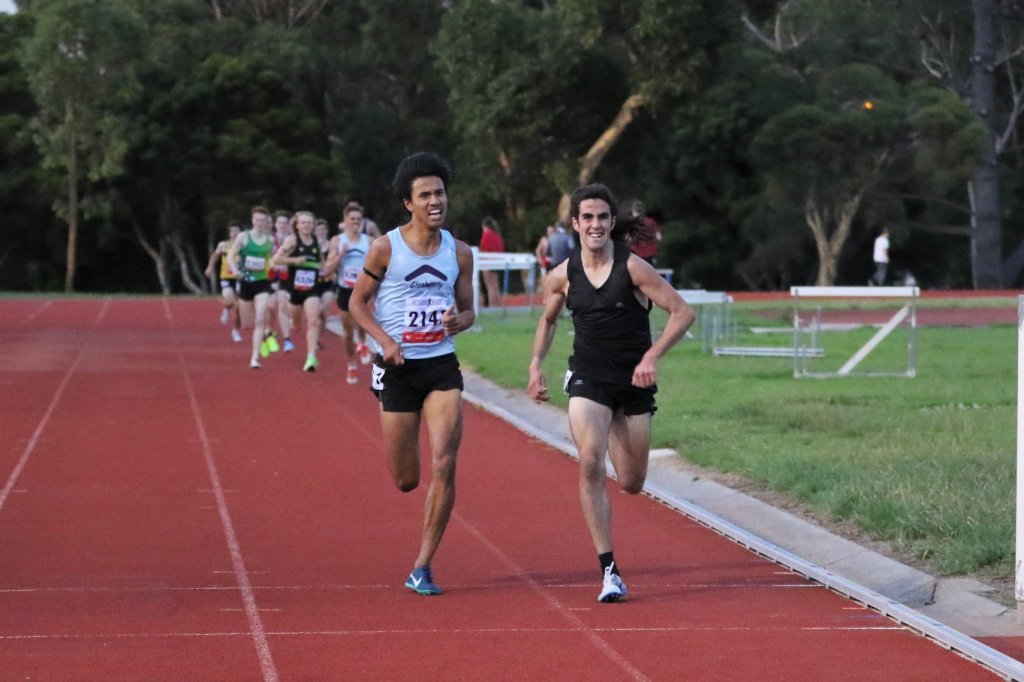
After trailing for most of the trip it was Clayton who would rub shoulders with O’Donnell on the back straight, with O’Donnell rallying strongly along the railing to hold onto the lead.
In undoubtedly the race of the night, Clayton loomed up alongside the man on debut and threatened to take the lead on the home straight, but O’Donnell proved too strong as he punched along the inside to take the win.
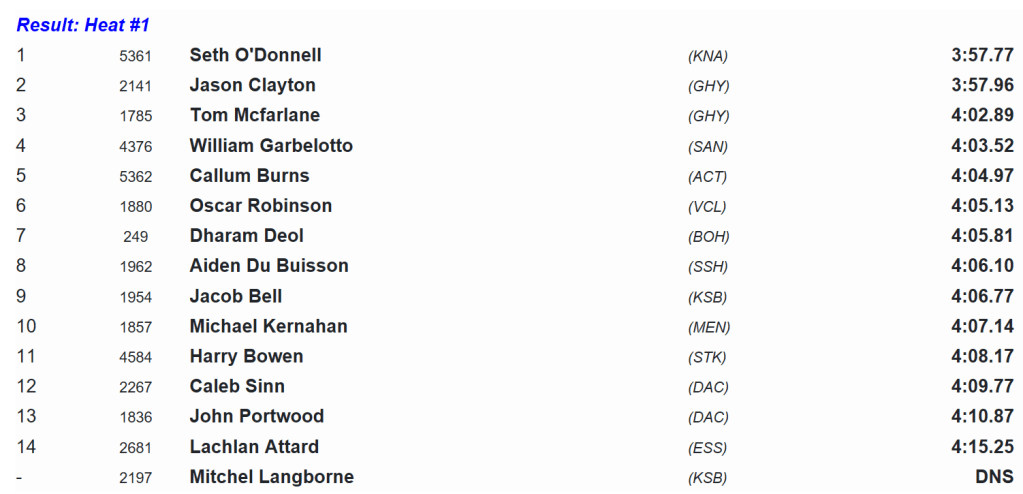
The pair ran 3:57.77 and 3:57.96 respectively, pretty outrageous for a ‘D’ heat of the Victorian Milers Club.
Tom McFlarlane locked down 3rd placing after an intelligent run, ahead of the ever-improving Will Garbelotto, who has now lowered his 1500m best from 4:25 to 4:03 this season.
Congratulations to everyone who competed at Meet 3 of the Victorian Milers Club for contributing to an outstanding display of middle distance running.
The foundation of running is to see how fast someone can get from Point A to Point B. Whether it be 100m or a marathon, that’s what athletes and fans alike are obsessed with.
The faster the better, until now.
Whilst doping has tainted the integrity of the sport in recent times, comparisons between the dark art and a pair of running shoes are absurd.
A very small percentage of runners have been caught doping, but all runners wear shoes (unless you’re Abebe Bekele).
My opinion is simple:
More efficient shoes will assist an athlete to reach their potential, whereas performance enhancing drugs will increase their potential.
Prior to the mid 1960’s athletics tracks were made of cinders which were said to be roughly 1.5% slower than the modern day all-weather athletics track. This would change the conversion mark for the elusive 4-minute mile to 3:56.23, which is a completely different ball game.
The bottom line is that technology has propelled the sport of distance running through both science in the form of understanding the human body, and so too the advancement of resources.
Looking for ways to run faster is not new.
Here’s Craig Mottram and his team in a short documentary entitled ‘The Big Mazungu’ talking about custom spikes (skip to 11:50).
Craig Mottram and scientists discuss the advantages of custom shoes.
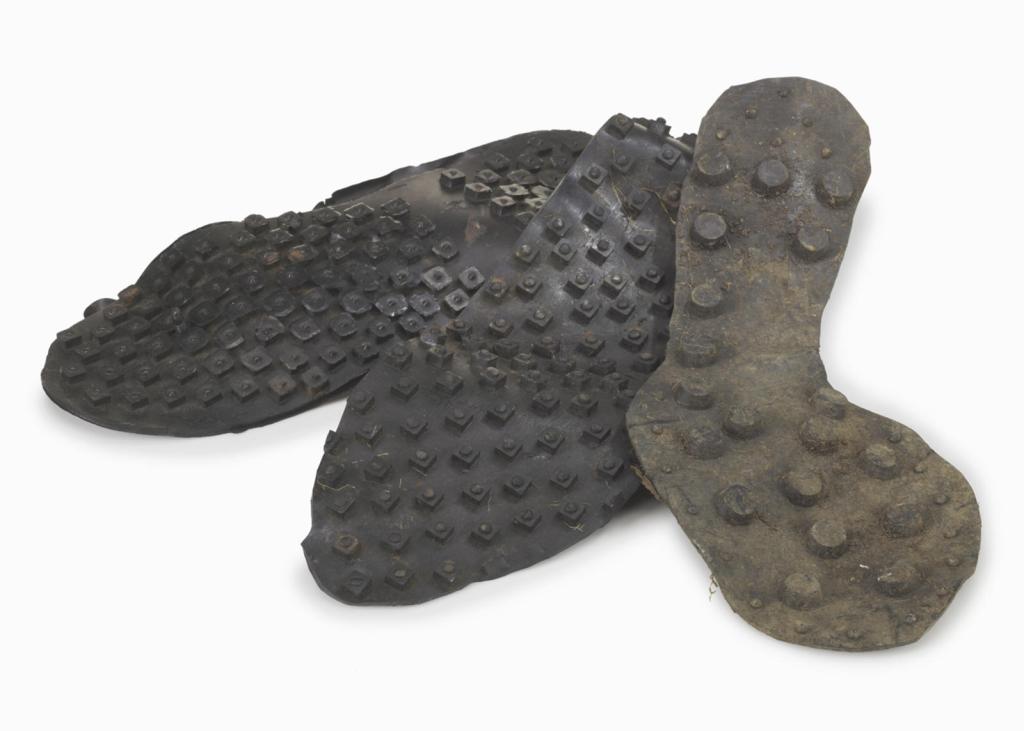
Furthermore, if you take a look back to 1971, Bill Bowerman (who would go on to co-found Nike) used his waffle making machine to form an innovative shoe sole that would allow runners to perform to the best of their ability.
An early prototype of Bowerman’s ‘waffle’ shoe soles.
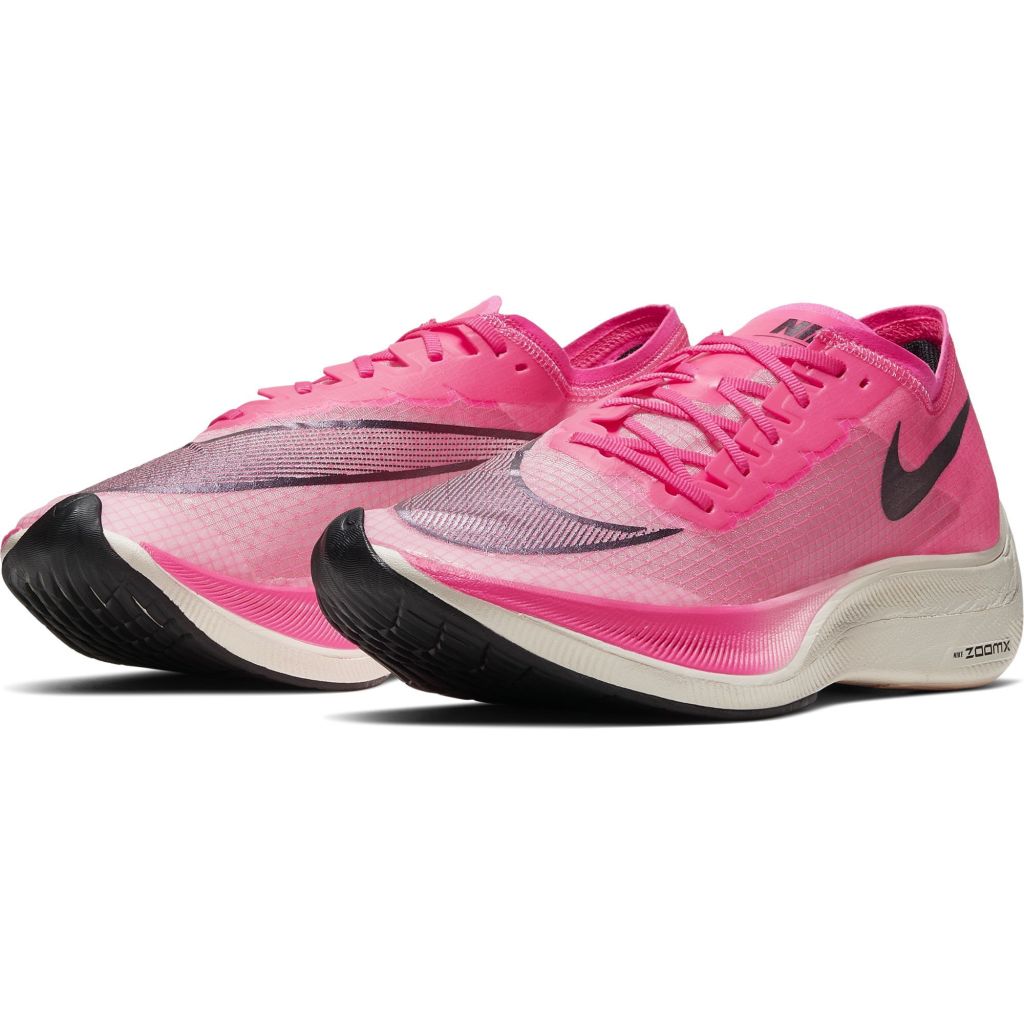
So why in 2020 are we up in arms when Nike have made the next big technological breakthrough?
I don’t think Bowerman was flogging his waffle shoes to the masses on eBay, so the take that they provide an unfair advantage and aren’t available to everyone doesn’t sit well with me.
Both the 4% and Next% models in question are available on Nike’s website to anyone in the world with $320 to their name. How is that unfair?
No shoe on the market generates more energy than the runner puts into it.
In an athletics race when someone is winning you don’t ask them to slow down, you speed up.
Nike is currently like the man-child in the U14’s, and instead of appreciating how good they are, we are whinging like the parents from the opposition.
Just a few days ago Rhenox Kipruto demolished the 10km(road) World Record in a time of 26:24. The 20-year-old Kenyan was wearing Adidas shoes.
If you aren’t on the Nike train, be like Rhenox. Use another shoe and get on with it.
The talk of Nike’s developments has taken away from the quality of the athletes.
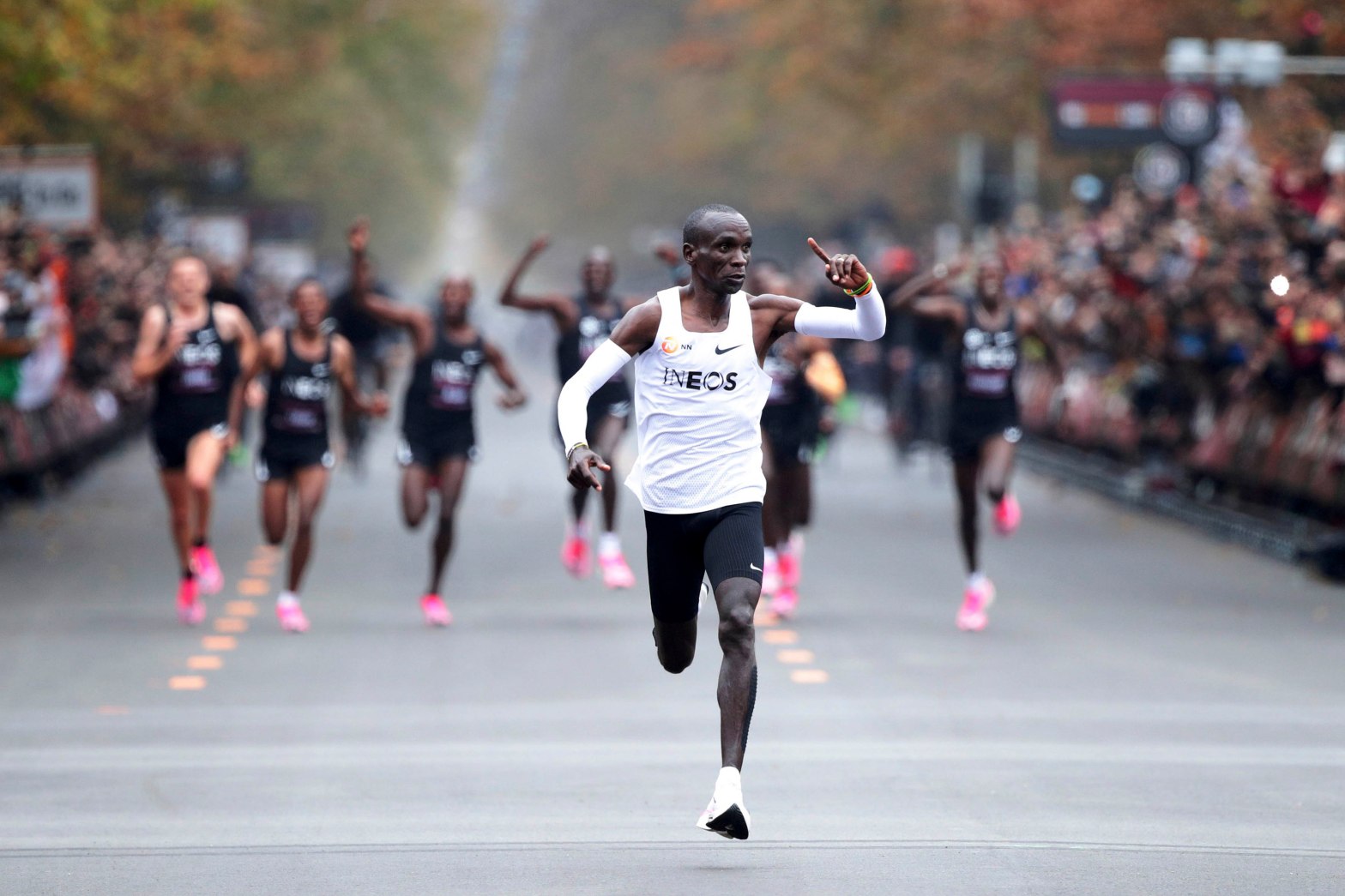
Kipchoge ran in custom shoes, but professional athletes in most sports have custom equipment to suit their personal needs. Running should be no different.
Kipchoge had the following to say on the controversial topic.
“It’s the person who is running, and not the shoes,” Kipchoge said.
“It is (Lewis) Hamilton who does the driving and not the Pirelli tyres.
“Controls have to be there because fairness is good.
“But technology is growing and you can’t deny that.”
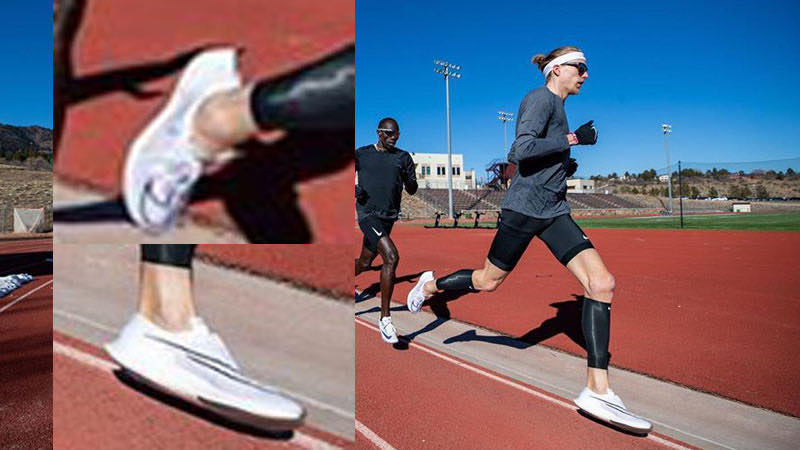
It would appear Nike is already on to their next project anyway.
Evan Jager trials some new wheels.
Stack height rules? Nike, way ahead of it, very clever if there's a CF plate in there. (moderately amusing that @EvanJager is mentioned as 'handsome' in the same tweet, luscious locks on the fella). https://t.co/3WHW5FHSPK
When it comes to running shoes this is not a new thing. Athletes constantly jump on the best possible shoe and then wait for the next one. And why wouldn’t they?
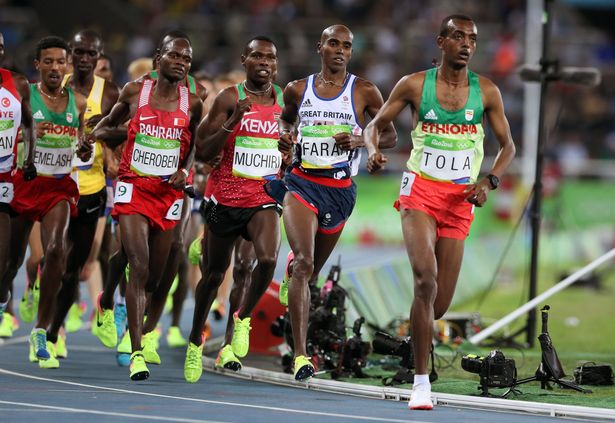
A Nike dominant field in the 10,000m at the 2016 Rio Olympics.
Nike are well ahead of the game. If we try to restrict resources to preserve previous performances, the potential of future performances will be limited.
For many years shoe companies have been trying to find the edge. So now that Nike have succeeded, why are we upset?
To finish on a personal note,
I recently finished 10th in a race at the Victorian Milers Club. Should I ask for this to be corrected to 9th as the winner, Will Garbelotto, was wearing Nike’s Next% shoes? Or should I swallow my pride and understand that this is quite possibly the most irrelevant result ever?
I’ll go with the latter.
By the way, I’ve never run a step in the 4% or Next% shoes. Pegs 36’ers for me.
So as my friends prepared for an almighty showdown with the wily veteran gatekeepers at Lardner Park’s ‘Beyond the Valley’ festival, I was preparing for my own matchup.
Not against fellow man, but instead mountain.
As they pulled apart their cars and resealed water bottles in a bid to avoid paying $12 per beer, I was playing Tetris with my Nikes in my suitcase (and losing).
I was off to Falls Creek for the first time.
As we neared the destination and my trusty Mitsubishi Challenger sluggishly made its way up the 30km climb and the range dropped from 300km to 150km, it seemed like a fitting time to lecture the young bloods in the car on petrol prices.
“So how much does a tank cost?” they asked.
“About $200,” I joked with a smile in the rear vision mirror.
They didn’t laugh, but the sound of velcro wallets and coins was pretty innocent.
After a long day of average chat and hearing Dua Lipa’s new track seven too many times (the first five were pretty good), we’d made it to Falls Creek.
First impression? Shit, much hills.
The boys were roaring with confidence. I’m talking windows down, sunnies on, music blasting (pretty much the mainies scene from Angry Boys).
But it soon became clear we were about to be a part of something much bigger, and as far as the Falls Creek food chain goes – we were somewhere near the bottom.
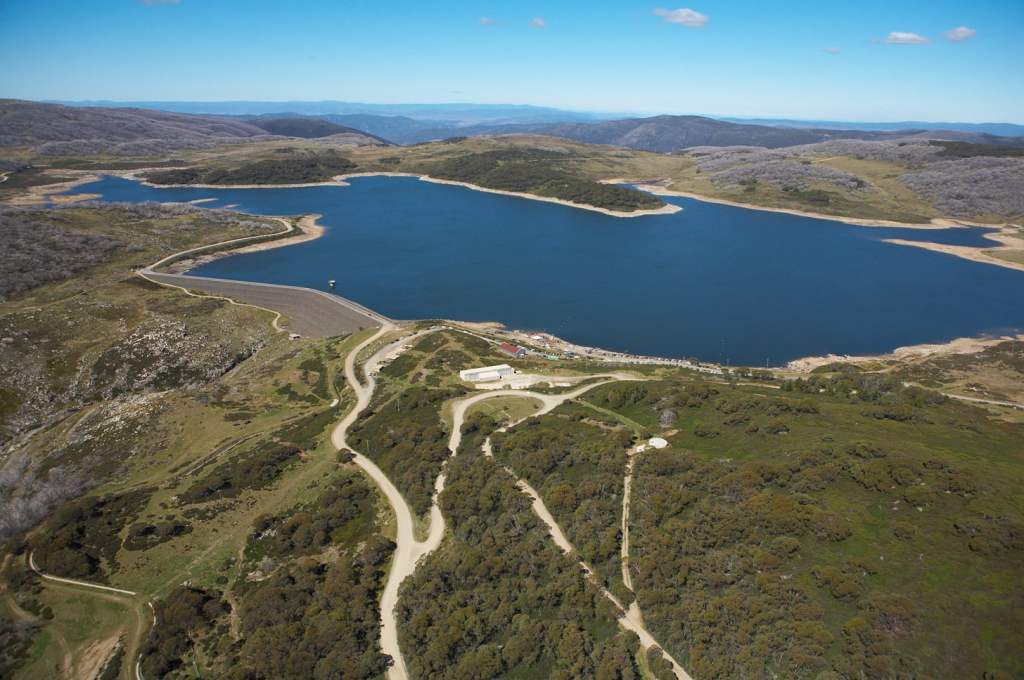
Our newbie status was confirmed very early on in the piece when the simple instruction of “meet at the aqueduct at 5pm” may as well have been in Chinese.
Turns out asking where that is might’ve been a better option than the old play it cool like some sort of jock in a movie.
This would be my first lesson for any future Falls attendees.
Lesson 1 – The aqueduct could mean pretty much anywhere.
Falls Creek Fun Fact: By saying “meet at the aqueduct”, one narrows down potential meeting places to a mere 75% of Falls Creek.
So on the first day we got lost and ran on our own and I uploaded a photo on my Strava activity so no one looked at the map and realised I was a noob.
This brings me to my second lesson.
Lesson 2 – Know your place.
The aim is to fit in, not stand out.
Undoubtedly there is a buzz around the training sessions at Falls Creek, but this doesn’t give you superpowers. Find your crew for the easy runs and sessions and stick with them.
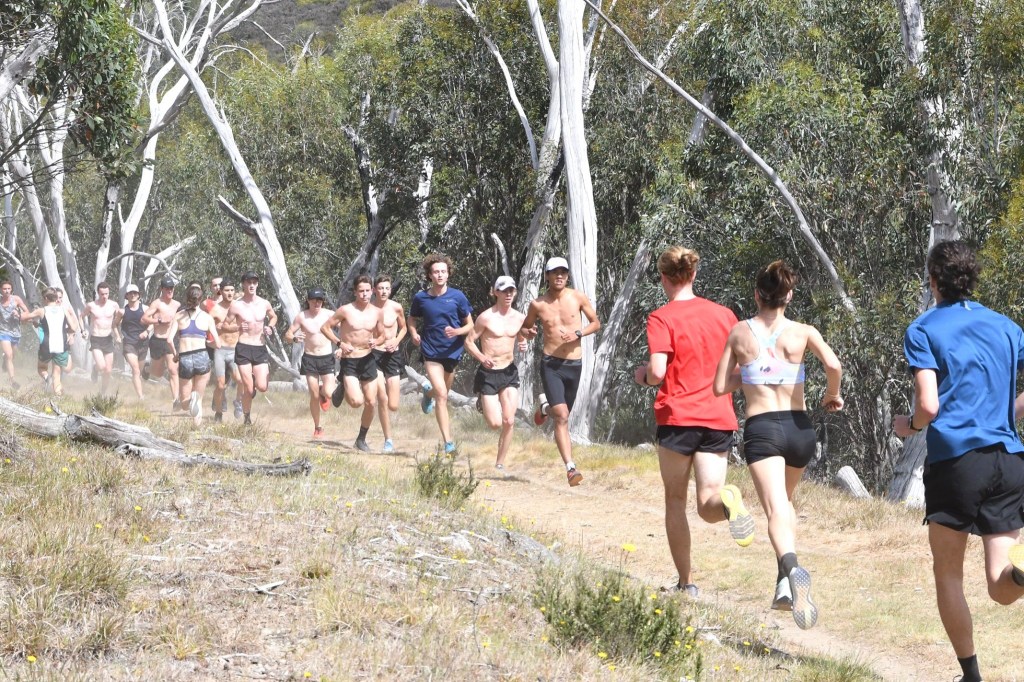
Day 2 loomed as some kind of brutal running gang initiation at Mt McKay.
Sprawled across my double bed I hit the hay and hoped to dear god my body was more efficient on the hills than my car.
Saturday
My first ever session at Falls Creek would consist of 5x800m hills.
The wry smile I got from a few seasoned campaigners when telling them this was most concerning but the warmup was underway and I was jogging with world class athletes that had previously only existed on Instagram or YouTube, so the hills were a worry for the future.
But the future soon arrived.
It was a case of follow the leader. No whistle or stopwatches, just the big dogs start running and everyone follows.
I’d found my group and as we rolled out the first rep it soon became clear that we should save the chat for the recovery on the way back down the hill.
After the second rep the chat had diminished, and by the third we were grunting at each other like cavemen.
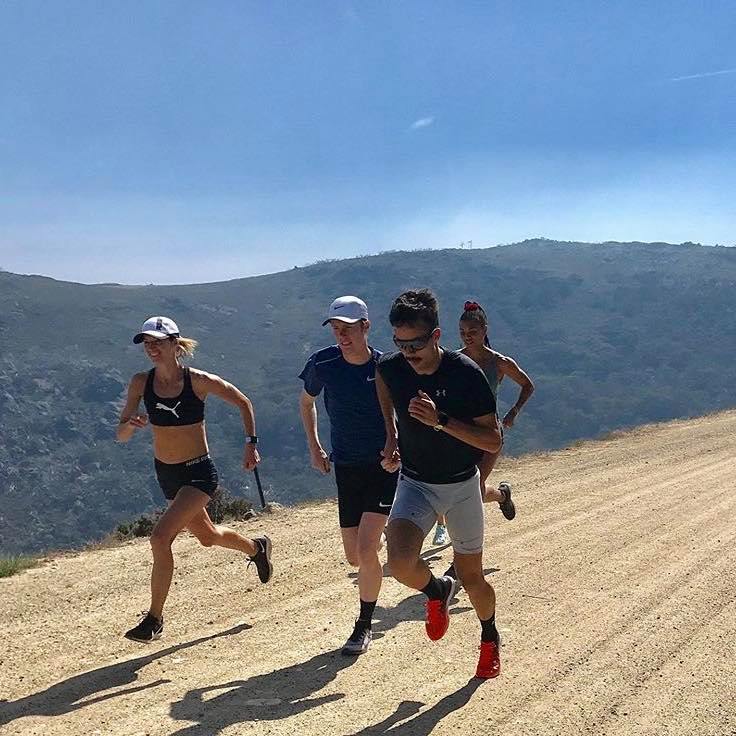
Team Mathews Running tackle Mt McKay in November 2019.
There were cones placed at half way for those doing an altered session and by the fourth rep my suspicion that it takes 1 minute to get to half way and 3 days to get to the finish was growing stronger.
In my opinion the second last rep is always the hardest.
So after one more time up the mound I had survived Mt McKay, for now anyway.
It was an uncomfortable experience which was rivalled by the next step of my initiation, which I would soon refer to as the ‘cold as f@&k water’, as the boys lowered themselves into the numbing shallow water.
Turns out this thing is also called an aqueduct, but if someone says meet at the aqueduct don’t go to this one – no one meets there.
I was convinced I had completed the toughest session of the trip.
Experiencing Mt McKay and Death Valley in my first two proper days at Falls I’d assume is what Nathan Lyon felt like batting against Dale Steyn from one end and Morne Morkel from the other.
So the easy run on Monday was the equivalent of a part time off-spinner sending down some pies.
Some core and hurdles in the evening would top off a refreshing day, made more refreshing by the fact that I skipped the hurdles.
As the groups were called in 5 second increments starting at 2:45/km I got a reality check as I was shuffled back a long way.
I was knocking over the reps in times I was happy with considering the varying factors (about 3:15’s on average), but ahead of me were a lot of people.
Lesson 4 – Compare yourself to yourself.
By no means am I a guru, but I saw Falls as an opportunity to better myself as a runner and experience an elite training environment.
I’d say most runners have that competitive urge – the fire in the belly to beat whoever they are racing or training with.
The thing about Falls is it’s just not going to happen, and that shouldn’t be disheartening.
A good session for you depends on where you’re at, so be pushed by those around you and help each other, but when it’s all said and done you are the judge.
Photo by Ewa Facioni
With the 1km’s in the bank it was almost time for the New Year’s Eve celebrations.
So what do a bunch of athletes on a mountain do on such an occasion?
Drink cups of tea and tell running stories, obviously!
I bumped into two-time world champion Jaryd Clifford (he must’ve been on his seventh cup of tea at that stage) and we half joked about starting a website.
Hopefully it was Jaryd talking, not the cups of tea.
Too much tea meant a lot of athletes didn’t run on Wednesday, but I mustered 40 minutes (one of those blokes).
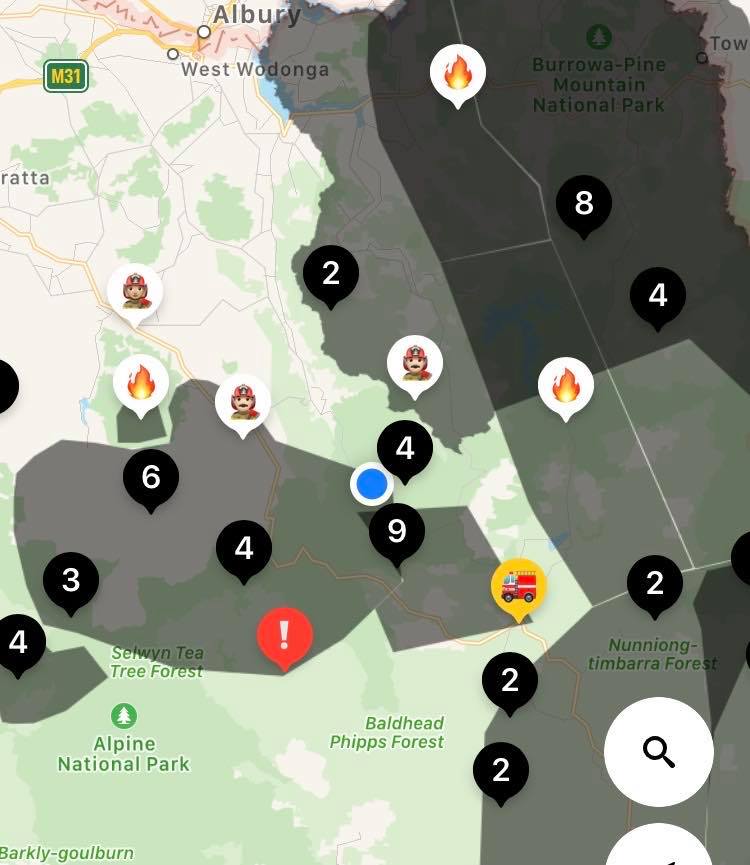
A phone call from dad regarding the fires was hosed down by my reassurance that “it’s all good, we can’t even smell it”, as I watched on from inside and the gloomy skies loomed ominously out the window.
Mum was less easily convinced.
Fires closing in on Falls Creek on 2/01/2020
Some incredible scenes even saw the Australian Fires and VicEmergency apps rival Strava as the most used app on the mountain.
As the evening approached the phones started to ring and plans started to change.
But rest assured, in the morning it would be business as usual.
Having a session on the next day really assisted in justifying eating subpar pasta for the sixth night in a row. You know when everyone is eating and someone goes with the old “at least we’ll be fueled up for tomorrow,” which apparently makes up for the fact you’ve been eating canned spaghetti.
Thursday morning swung by and almost insultingly the session was overshadowed by talk of the return to the hallowed Mt McKay on Saturday.
The workout was gruelling as the hills were taxing and you paid for them on the threshold before returning to get taxed a little bit more, in typical Australian fashion.
The end of the workout saw all eyes turn to Mt McKay for the second match of the two match series against the 800m beast.
But this talk would not be prolonged.
After crawling back to the accommodation and a trip to Nature’s ice bath, “see you guys later on” soon became “thanks for the trip.”
The fires posed a serious threat and the numbers on the mountain quickly dwindled as athletes packed their bags and evacuated.
As I hit the road the disappointment of a training camp cut short kicked in initially, but the reality of the Australian bushfire crisis lingered.
I’d never been to Falls Creek before but in just one week I could see how special it is to the running community and its value. It’s a place Australian distance runners have shared for years on end as competitors and teammates of all levels have worked together towards raising the bar of Australian running.
The running community thrives on support and working towards common goals and David McNeill’s ‘#kms4bushfires’ initiative displayed the comradery of runners as they pledged to donate money per kilometre run in a given week, and in the words of McNeill himself, it has “brought out the best of what running culture is: empathy, humility and community.”
Hopefully this is not a passing trend and Australians continue to support those impacted for a long time to come.
Cheers to everyone who I met at Falls for a good trip, and to those who gave me a tow unknowingly. I’ll be back next year no doubt!
The second meeting of the Victorian Milers Club featured graded races over 800m and 1500m on a picturesque evening at Hagenauer Reserve on Tuesday the 10th of December.
With Melbourne’s iconic Lakeside Stadium currently under the knife, Box Hill’s Hagenauer Reserve has established itself as the hub of Victorian athletics for the summer.
Whilst Strava is the undisputed king of apps on any runner’s phone, WillyWeather can often run a good race for second the days leading up to race day, as athletes eagerly anticipate race conditions.
You’d be amazed how exciting a drop from 20km/h winds to 15km/h winds can be!
The weather posed no threat on Tuesday though with light winds and a dry track ensuring conditions conducive to fast times and an enthralling night of athletics.
As the crowd rolled in and packed the grassy hill on the back straight, the 800m athletes set the tone as the sun set to the soothing vocals of Tim Crosbie.
You’d almost take your girlfriend there.
I like to think of the lower grades of races at Milers as the passing of the torch, as the stubborn stiff-legged veterans with the flexibility of a brick attempt to hold off the young whipper snappers, who seemingly register cadences of about 300 (but it might be 290, so don’t quote me on that).
It makes for exceptional viewing.
But it was soon time for the cream of the crop to float around the track, here’s how it unfolded:
Jacob Reed was back after taking out the event at the first Milers Meet, as he looked to string together a picket fence. On that occasion he got the better of former equal Australian record holder over 800m, Alexander Rowe, who would also return toe the line at Box Hill with Andre Waring and Jack Stummer.
Waring was back over the shorter trip after a blistering 3:48.82 for 1500m on the very same track just two weeks earlier at Box Hill’s annual Whitehorse Twilight Meet.
The additions of Robert Lister, Grant Muir and Luke Shaw added depth to a very classy field.
After scrambling start it would be Luke Shaw who found the lead, ahead of Knuckey (who was sporting an unreal speedsuit), followed by Lister, Muir and Rowe as they settled and were greeted by the bell after just 53 seconds.
Shaw extended down the back straight, reluctant to give up his lead, as the long-striding Knuckey poured on the pressure and Lister scraped the railing. Muir close enough if good enough.
Shaw had seen nothing but clear space since the crossing, but as they cornered the home straight he would soon have Lister breathing down his neck, and would eventually succumb to the powerful Lister surge.
Shaw held on for a valiant second placing, ahead of Muir who flashed home for third in the Athletics Chilwell colours.
Women’s 800m A
There were two races in the Women’s 800m A event. The first was hometown hero Georgia Griffith coming up against the almighty clock, and the other was everyone else against… everyone esle.
Griffith was undoubtedly the class runner of the field, fresh off a world championships campaign in Doha where she ran the 1500m.
Griffith set her intentions early as she sizzled through the first 200m in 29 seconds and established a 10m lead over second fastest seed, Bernadette Williams, before settling into rhythm.
She would proceed to meet the bell at 62 seconds, followed by Williams through in 64, and the chase pack in 66.
Griffith lengthened down the back as the $125 cash bonus for a time between 2:03.1-2:04.0 became a reality. Williams was failing to make any inroads, but was holding the chase pack at bay.
As the race wound up it became clear that everyone was a winner. Griffith walked away with a neat time of 2:05.84, the Milers Club kept their money, and Williams and the chase pack led by Brigitte Humphrey rounded out a high quality race.
Men’s 1500m A
Young gun central.
The Men’s 1500m A heat boasted two types of names – big names, and names that are about to be big.
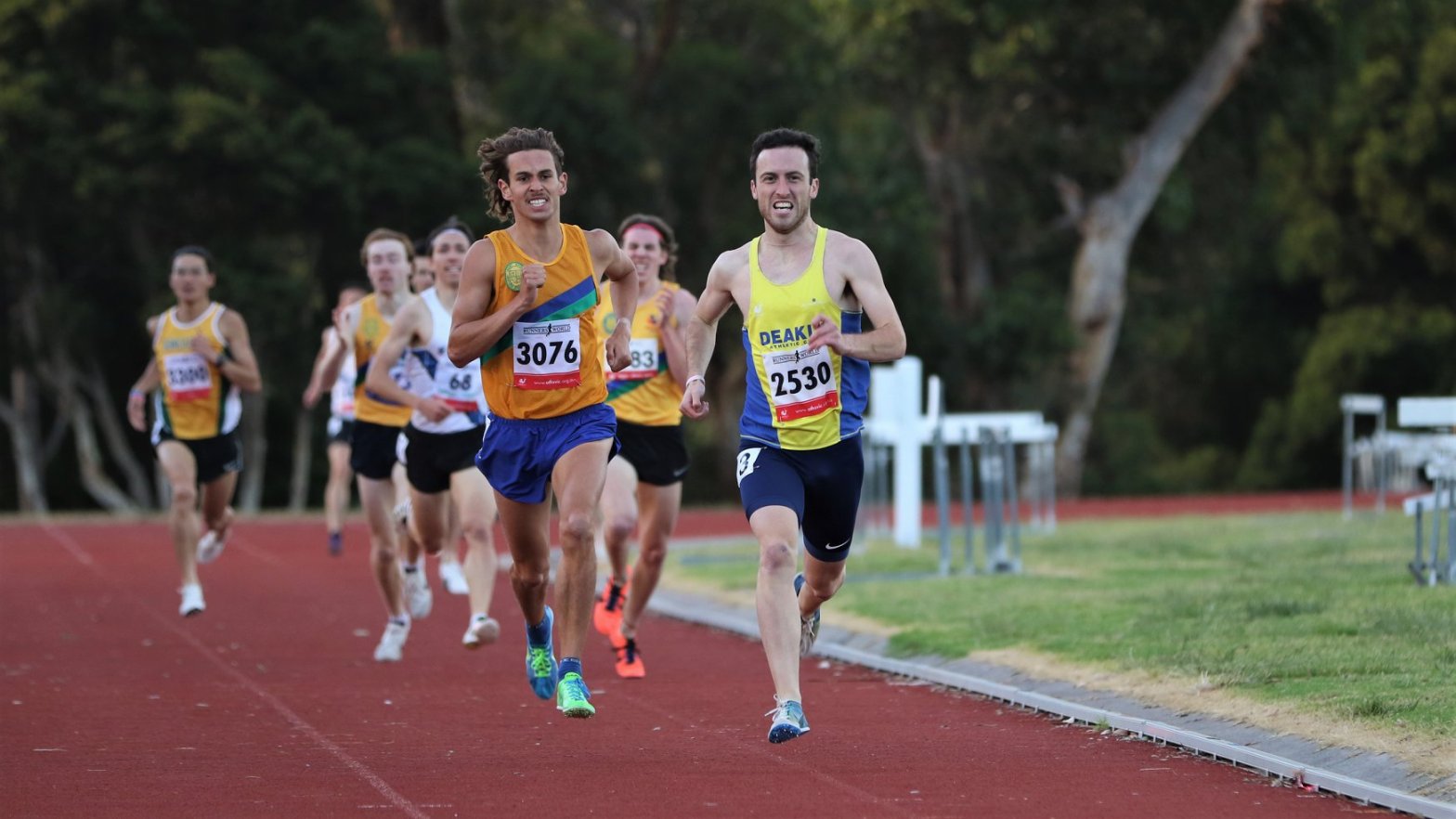
The Steve Fabris stable (Rising Track Club – check out there Insta @rising.tc, I rate it anyway), was out in force – ably led by Will Lewis. Lewis and his disciples would be up against the forces of Mitch Thompson, Yuan Chow Lui, the refreshed Tom Sellwood, and Milers staple Matthew Scott.
Whilst unfamiliar over the 1500m trip, it would be a brave Scott who drew the first blood with a bold move as he bounded to the early lead. Trailing Scott were a host of teenagers including Lewis, Sellwood, Roberts and Lui.
The 800m man set the pace and made the race, but dwindled at the bell as Thomson made a move full of authority.
A watchful Will Lewis caught the back of Thompson and the two heavyweights were set alight. Behind them would be the Craig Mottram coached Tom Sellwood, and a raging Josh Collins, thrashing his head about but moving rapidly nonetheless.
Thomson and Lewis made light work of the last lap as they ran away from the field, but it was Thomson who saluted (literally) to take the win.
Sellwood rounded out the trifecta and edged closer to the elusive sub 3:50 barrier.
Amazingly, Scott drifted from 1st place to 8th place in the space of 150m before displaying what I’d like to describe as some genuine gas to get home for 4th.
12 of the 13 competitors broke the 4-minute mark, and whilst it may not have been Nathan Pearce’s night, we all know you can’t keep a man of that caliber down. Keep your eyes peeled for #nafenation next meet.
You get the feeling that these blokes are going to be racing each other for a long time to come.
Women’s 1500m A
The women’s 1500m field consisted of a wide range of seed times, headlined by two 2019 World Championship representatives in Paige Campbell and Morgan Mitchell.
Campbell applied her craft in the steeple in Doha, whilst Mitchell silenced the critics by qualifying for the semi-final of the previously uncharted 800m journey under the tutelage of Elizabeth Mathews (Team Mathews Running – @team_mathews_running on Instagram, not your worst follow).
But here they were at a local athletics meet on a Tuesday night over 1500m.
Mitchell flirted with the early lead but refused to assume control, as Campbell slammed on the accelerator and had the field in single file in no time. That’s what Milers is all about!
Campbell maintained control with Mitchell trailing 20m behind throughout the middle stages of the race, as Bernadette Williams surged into third place after her 2nd placing in the 800m A event. Incredible.
In a relatively uneventful affair it was Campbell who held off a fast-finishing Mitchell to take the home the victory, with Shanie Landen winding it up to pinch 3rd ahead of the resilient Williams.
Mitchell’s strength over the last lap to secure a solid PB over the 1500m is a strong indicator of her improved endurance base, which is a scary thought when you consider her 800m best of 2:00.06 almost six months prior.
The former sprinter is knocking on the door of a sub 2 minute 800m, and if no one answers it looks like she is going to kick it down anyway.
Catriona Bisset currently holds the Australian national record of 1:58.78 after an outstanding season, and with Mitchell (2:00.06) and Griffith (2:00.13) following her lead- it is a very exciting time for Australia’s 800m fleet.
Men’s 1500m B
This ‘B’ heat oozed a bit of class.
Johnny Gusman found the top and assumed control whilst modelling a dynamic duo of arm warmers and a headband.
Each to their own, I’m a fan.
Whilst Gusman controlled the front, Dion Finocchairo patrolled the back with AV staff member Sean Whipp.
Finocchairo, a member of Sean Williams’ ‘Melbourne Pack’, is no stranger to laps of an athletics track and has displayed his ridiculous range in the past few months.
How’s this for a timeline!
October 27th – 100km – 7:03:30 (4:14/km) November 14th – 5km – 15:09 November 28th – 1500m – 4:04 December 4th – 10km – 31:30
The Frankston duo of Lachie Enno and Jess Dunsmore along with Doug Buckeridge kept in contact with the lead bunch, as the bell spelled trouble for Gusman after doing a mountain of work out front.
The moves came at the 300 with the training partners of Enno and Dunsmore injecting some serious speed into the race, with Buckeridge warming up the engine in hot pursuit.
They wanted sub 4 and they needed to be seriously good from there.
But good they were.
Enno and Dunsmore showed pure grit to grind out the last 200m and both sneak under 4 minutes, with Enno even having time to pull up and comprehend the feat.
Buckeridge channeled his inner sprinter with a textbook dip in desperation, but unfortunately he fell agonisingly short, running 4:00.90.
Buckeridge is an elite young talent and look out for him to break 4 minutes at the next Milers meet on the 23rd of January. You’d back him to the hills from here.
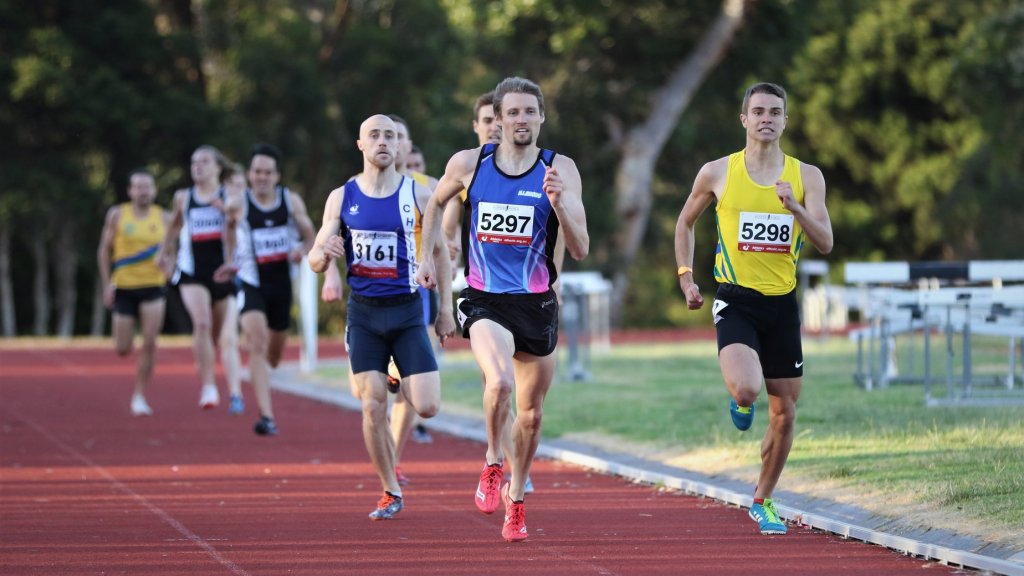
Men’s 800m B
If you want your son to win athletics races, send him to St Kevins.
The 800m B heat consisted of a host of chances, headlined by near religious Vic Milers competitor Darcy Powne (the pacemaker guy).
Humphreys was the pilot, ahead of Carr and Powne as they strung out early and Rob Cap could see them all.
This was the only race of the night where two athletes wore sunglasses.
Powne threw down the gauntlet on the back straight and there weren’t many takers as he surged to what seemed to be an assertive lead.
Enter Matthew Hussey.
Powne took them into the home straight as Carr launched himself into contention and Hussey tacked on.
But in the last 50m it was all Hussey, as he made class runners look like they were treading water.
The Milers Club will be back on the 23rd of January with another installment of 800m and 1500m races.
Congrats to everyone who competed and cheers to everyone who helps organise and support these great meets.


 Words by House